
When to Replace Your Water Heater in Canada: A Technician’s Guide
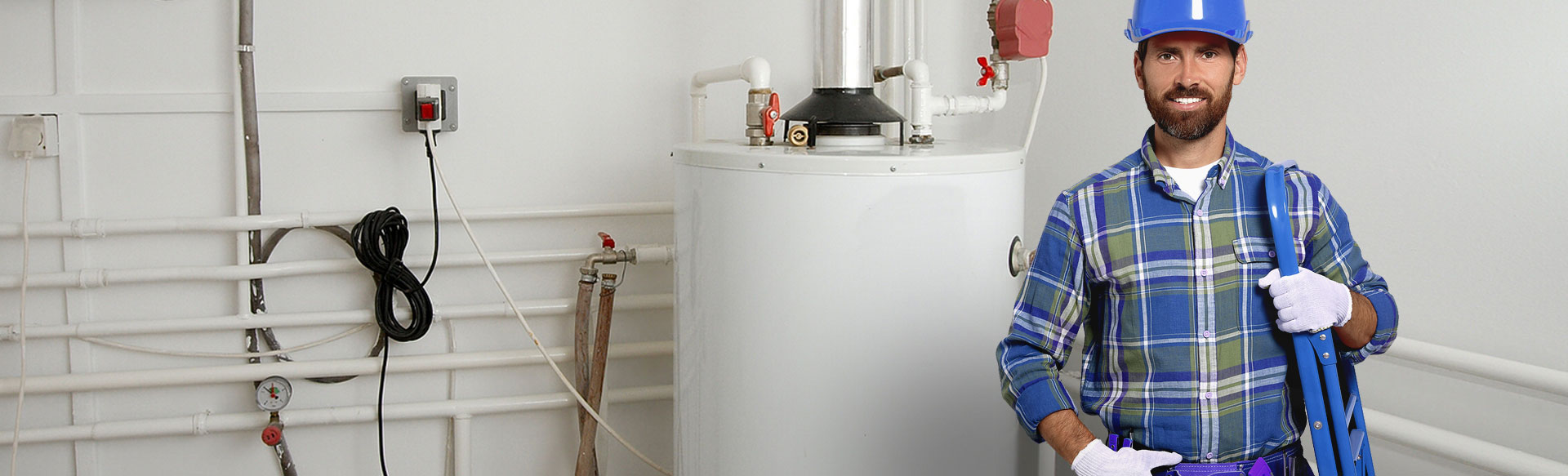
It was a Sunday morning in February. Minus 18 outside. A homeowner in Mississauga called us because there were several inches of water across her basement floor — her aging tank water heater had split along the bottom seam overnight.
The tank itself cost well under two thousand dollars to replace. The water damage to the finished basement cost several times that — and the tank had been warning her for a year. Rumbling noises. A rusty tinge in the hot water.
Water heaters are the most ignored appliance in the house. Almost every catastrophic tank failure I have seen gave the homeowner fair warning first. Here is how to read those warnings, and how to decide what comes next.
How Long Does a Water Heater Actually Last in Canada?
A conventional tank water heater lasts 8 to 12 years in Canadian conditions. That is not a marketing number — it is what the steel tank, the glass lining, and the anode rod inside are engineered to survive. We tell homeowners to start planning at year 10. Past year 12, you are on borrowed time, and every winter you push it is a gamble with your basement floor.
A tankless (on-demand) water heater lasts 15 to 20 years or more, because there is no tank of water sitting and corroding 24 hours a day.
Canada is harder on water heaters than most places, for two reasons. Hard water: much of the GTA and southern Ontario has moderately hard water. When water is heated, dissolved minerals drop out as sediment and pile up on the bottom of the tank, insulating the water from the burner. The burner runs longer and hotter, the bottom overheats, the steel fatigues, and eventually it lets go. In hard-water homes that never flush the tank, I have seen tanks under a decade old with several inches of sediment inside.
Cold incoming water: in an Ontario January, water entering your house can be barely above freezing — around 4 to 7 degrees Celsius — and your heater must lift it to 49 degrees (120F) every time someone turns on a hot tap. That is a far bigger workload than the same unit faces in a warm climate. Add a damp unfinished basement all winter, and the outside of the tank corrodes faster too.
5 Signs Your Water Heater Is Telling You It’s Done
1. Rusty or discoloured hot water. Run the hot tap. If the water comes out brownish but the cold runs clear, the inside of your tank is rusting. Every tank has a sacrificial anode rod that corrodes so the tank does not have to. Once that rod is gone, the tank starts eating itself. Rusty hot water means the rod lost that fight a while ago.
2. Rumbling, popping, or banging from the bottom. That is water trapped under sediment, boiling and bursting through. The sediment forces the burner to overheat the bottom of the tank. A noisy tank is an inefficient tank under stress.
3. Water pooling around the base. Non-negotiable. Actual pooling or a slow weep from a seam — not condensation on a humid day — means the tank has failed. There is no repair for a leaking tank. A weep becomes a split, and a split becomes the Mississauga basement I described above. Call someone that day.
4. It is 10 or more years old. Check the serial number on the rating plate — for most brands (Bradford White, Rheem, AO Smith), the first digits encode the manufacture date. If you cannot decode it, call us and we will read it for you. A 12-year-old tank owes you nothing.
5. You are running out of hot water. If the morning showers used to be fine and now the third person gets a cold surprise, sediment has likely eaten a chunk of your tank’s capacity — or the household simply outgrew it. Kids becoming teenagers is the classic trigger.
Tank vs. Tankless: An Honest Comparison
A conventional tank costs $1,800 to $3,000 installed in the GTA for a standard 40- or 50-gallon power-vented unit. Simple, proven, and it drops into the footprint your old tank occupied — same gas line, same venting, usually done in half a day. The downsides: it heats 200 litres of water around the clock, lasts 8 to 12 years, and stores 200 litres of water above your basement floor.
A tankless unit — we are a Rinnai Pro installer, so I will speak to Rinnai since that is what we put in most — heats water only when a tap opens. No standby loss, no 200 litres waiting to flood anything. A condensing Rinnai converts 90 percent or more of its gas into hot water, versus roughly 60 to 65 percent for a standard tank. Endless hot water, and it hangs on the wall. Installed cost in the GTA: $4,000 to $6,500 depending on venting and gas-line work.
Now the honest part — a tankless is not right for every home.
Your gas meter and gas line may not keep up. A tankless can demand 150,000 to 199,000 BTU the instant someone opens a hot tap — far more than a tank’s steady 40,000 BTU. Many older homes have a meter and half-inch lines sized for a furnace plus a tank, not a furnace plus a tankless at full rate. If the gas supply cannot deliver, the unit starves and throws error codes. Upsizing adds $500 to $1,500 or more. We check meter capacity before quoting tankless — if a contractor quotes you one without asking about your gas meter, get a second opinion.
Simultaneous demand in an Ontario winter is the real test. In February, incoming water is near freezing, so the unit must produce a huge temperature rise — cutting its real-world flow rate well below the brochure number. One shower plus a dishwasher is fine. Two showers, a dishwasher, and a washing machine all at once on the coldest night of the year can push past what a single unit delivers.
It costs more upfront and needs maintenance. At $4,000 to $6,500 versus $1,800 to $3,000, payback on gas savings typically takes 7 to 10 years for an average household. And in our hard-water region, a tankless needs a descaling flush roughly once a year ($150 to $250) or scale will choke the heat exchanger. Skip the maintenance and you will not see 20 years.
It needs electricity. No power, no hot water — the controls, fan, and ignition all need 120V. A tank with a standing pilot still gives you hot water in a blackout. Worth knowing if your area loses power in ice storms.
Tankless suits homeowners staying put 10-plus years, high-use households, and anyone short on basement space — provided the gas service can handle it. Selling in three years? A quality tank is the smarter money.
What Replacement Costs in the GTA (2026)
For a straight tank swap — 40- or 50-gallon, power-vented, no venting changes — expect $1,800 to $3,000 installed, including the unit, permit, and disposal of the old tank.
For a Rinnai condensing tankless, expect $4,000 to $6,500 installed. What moves you up or down that range: whether venting can be reused or rerouted, whether the gas line needs upsizing, condensate drain installation, and permit fees.
Watch for low advertised tank prices that turn into venting kits, permits, and disposal added as extras at the door. Ask for the all-in number before anyone touches a wrench. Our quotes include unit, labour, permit, and old-tank removal — the number we give is the number you pay.
What We Do at First Choice
When we come out for a water heater, we check three things before quoting: the age and condition of your existing unit, your gas meter and line capacity if you are considering tankless, and your household’s actual hot-water habits. Then we give you both options with real numbers. We’re a Goodman Private Label Plus Dealer and a Rinnai Pro installer, and every job is done by our own TSSA-licensed technicians, never subcontracted. Standard 10-year parts warranty, 5 or 10 years labour on select models, and we are available 24/7 because tanks love to fail on Sunday mornings.
Frequently Asked Questions
Can a leaking tank water heater be repaired instead of replaced?
No. A tank leaking from the body or a seam has structurally failed — patching a pressurized vessel is not safe or legal. Valves, thermostats, and igniters can be repaired; the tank itself cannot. If it is leaking, it is replacement day.
How do I find out how old my water heater is?
Check the rating plate for the serial number. On Bradford White units, the first two letters encode the year and month; on Rheem and AO Smith, the first digits are typically month and year. If you cannot decode it, send us a photo and we will read it for you.
Is a tankless water heater worth it in Ontario?
It can be, but do the math honestly. You need adequate gas meter capacity, realistic expectations about simultaneous winter demand, and a plan to stay 7 to 10 years for the gas savings to offset the higher install cost. High-use households staying long-term: excellent investment. Selling in three years: buy the tank.
Do I need a permit to replace a water heater in Ontario?
Yes, for any gas-fired unit. Gas work must be done by a TSSA-licensed contractor, with proper venting, combustion air, and shutoffs per the gas code. We pull the permit and handle the inspection as part of every replacement.
How long does installation take?
A tank swap takes 2 to 4 hours. A tankless conversion is a full day — longer with gas line or venting work. Either way, hot water back the same day.
Do I need a water softener if I go tankless?
Strongly recommended in hard-water areas. Scale is the number-one killer of tankless heat exchangers. A softener plus an annual descaling flush is what gets you to 20 years. Without either, expect problems in well under 10.
If your water heater is making noises it did not used to make, showing rust in the hot water, or creeping past its 10th birthday, do not wait for the Sunday-morning flood. Call First Choice Heating & Air Conditioning at 905-334-7885 or request a free quote online. We will tell you honestly whether you need a replacement — and whether a tank or a tankless is right for your house. Available 24/7.
About First Choice Heating & Air Conditioning: First Choice Heating & Air Conditioning provides residential heating and cooling services in Oakville and surrounding GTA communities, including furnace, air conditioning, heat pump, ductwork, water heater, and indoor air quality services.
Why Choose Us
We are leading HVAC company in GTA, specializing in the sales, installation, maintenance, and repairs of all HVAC units.