
Tank vs Tankless Water Heaters: Which Is Right for Your Ontario Home?
When your water heater starts leaking — or the hot water runs out halfway through a shower — most homeowners face the same question: replace it with another tank, or switch to tankless?
Both are solid options. Neither is “better” in every home. The right choice depends on your hot water habits, your gas and venting setup, and how long you plan to stay in the house. Here’s an honest breakdown from what we see every day on service calls across Oakville and the GTA.
How Each One Works
A tank water heater keeps 40–60 gallons of water hot around the clock. When you turn on a tap, hot water flows from the tank and cold water refills it. Simple, proven, and the most common setup in Ontario homes.
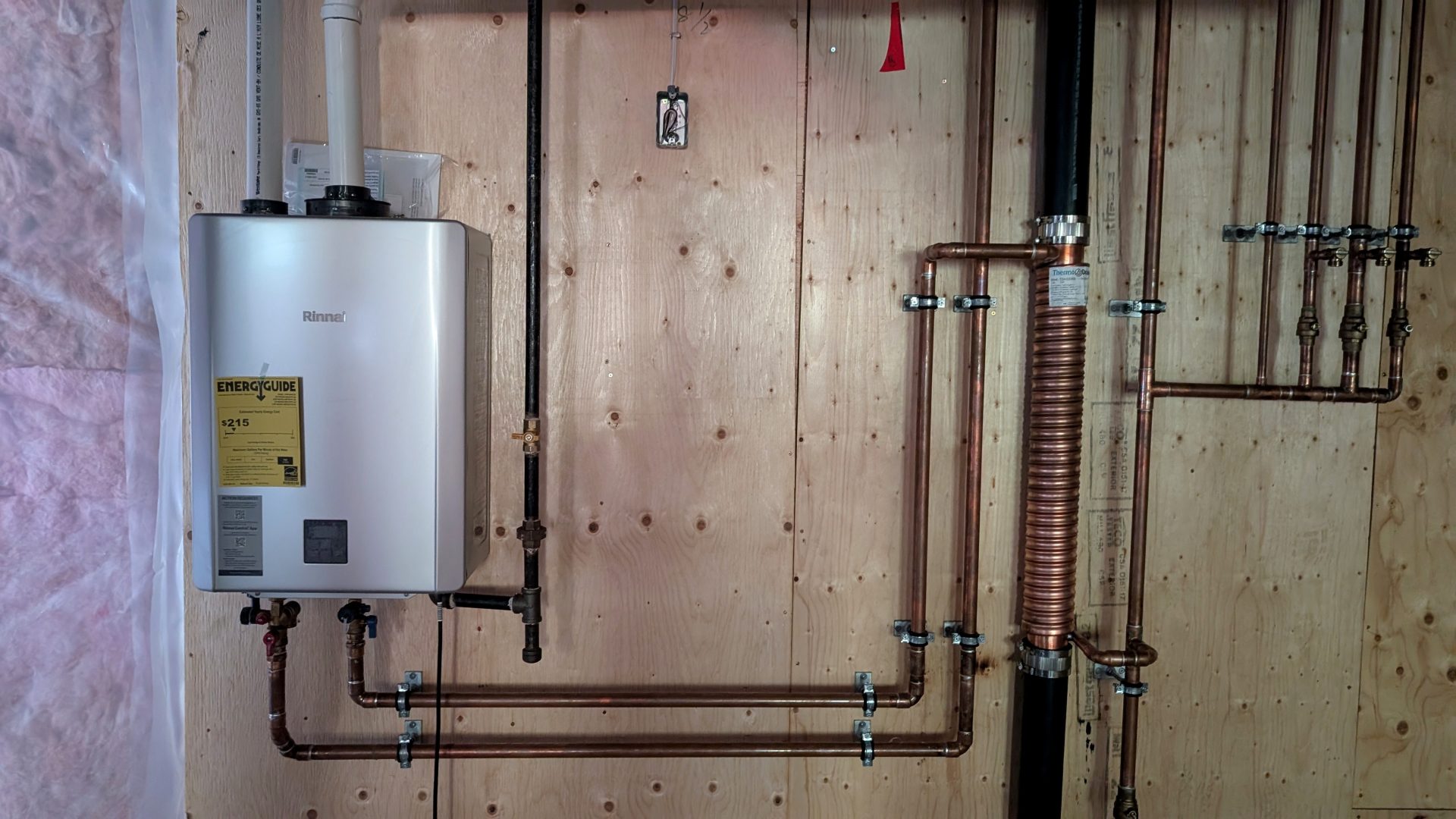
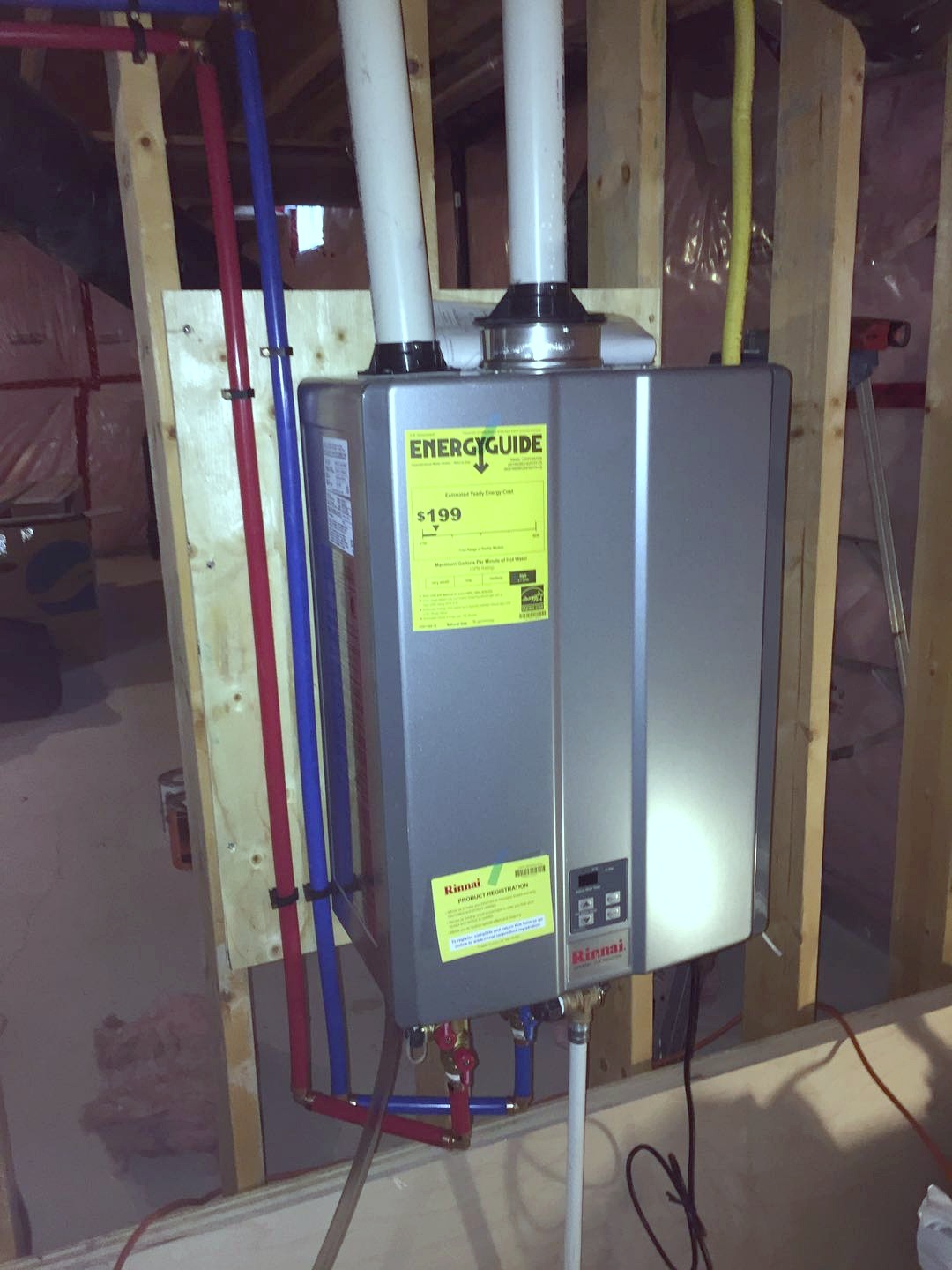
A tankless (on-demand) water heater — also called an instantaneous water heater — has no storage tank. When you open a hot tap, the unit fires up and heats water as it flows through. When you close the tap, it shuts off. As a Rinnai Pro installer, we put in a lot of these, and they’re excellent units — when the home is a good fit for one.
Upfront Cost: Tank Wins
There’s no way around it: a conventional tank costs less to buy and install. A like-for-like tank replacement is usually the cheapest job we do in the water heater category.
Going tankless typically costs more upfront — sometimes significantly more — for two reasons:
- The unit itself costs more. Tankless technology packs more engineering into a wall-mounted box.
- The retrofit work. Many Ontario homes switching from tank to tankless need a larger gas line, new venting (tankless units often require dedicated stainless or PVC venting), and sometimes an electrical outlet at the install location. That extra labour and material is where the price gap really opens up.
If your budget is tight or you’re selling the house in a few years, a quality tank is often the smarter money.
Hot Water Supply: Tankless Wins
This is tankless’s headline feature: endless hot water. A properly sized tankless unit doesn’t run out — it keeps heating as long as water flows. For a household where back-to-back showers, laundry, and dishwashing collide every morning, that’s a real quality-of-life upgrade.
A tank, by contrast, gives you what’s in the tank. A 50-gallon tank delivers roughly 35–40 minutes of showering before it needs recovery time. For most families that’s fine. For a house with teenagers and one bathroom, it can be a daily argument.
Lifespan and Maintenance
A conventional tank typically lasts 8–12 years in our area. Anode rods wear out, sediment builds up (especially with harder water), and eventually the tank itself gives up.
A tankless unit typically lasts 15–20 years — nearly double — because there’s no tank to corrode. One more thing that matters when choosing your installer: as a Rinnai PRO dealer, every Rinnai tankless unit installed by First Choice Heating & Air Conditioning comes with a 15-year heat exchanger warranty, a 5-year parts warranty, and a 5-year labor warranty. This warranty is backed by Rinnai itself, so the 5-year labor coverage stays in force even if a different company does the repair. Put simply: for the first five years, you’re covered on parts and labor — about as worry-free as water heating gets. But there’s a catch: tankless units need annual descaling/flushing to hit that lifespan, especially with mineral-heavy water. Skip the maintenance and you’ll lose both efficiency and years. We tell every tankless customer this upfront — it’s a great machine, not a maintenance-free one.
Energy Bills: Tankless Saves, But Do the Math
Tankless units are more efficient — they don’t burn gas keeping 50 gallons hot while you’re at work. Most households see noticeably lower water-heating costs.
But be realistic about payback. If going tankless costs you a few thousand more upfront (unit + retrofit), the monthly savings take years to close that gap. It pencils out best when:
- You’re already doing a renovation and the gas/venting work is happening anyway
- Your current setup makes the retrofit simple (e.g., the water heater sits on an exterior wall)
- You plan to stay in the home 10+ years
If none of those apply, a high-efficiency tank often wins on total cost of ownership.
The Ontario Winter Factor (Don’t Skip This)
Here’s something most online guides gloss over: incoming water temperature matters. In an Ontario January, the cold water entering your home can be just a few degrees above freezing. A tankless unit has to raise that water by 50°C or more, on demand, at full flow.
That means proper sizing is critical. An undersized tankless unit in a cold climate will give you lukewarm showers in February — and the homeowner blames the technology instead of the sizing. This is the number one tankless complaint we get called about, and it’s almost always an installation/sizing issue, not a product problem. Whoever installs yours should be doing the temperature-rise math for your actual winter groundwater, not just reading the box.
Space and Placement
Tankless units mount on a wall and free up meaningful floor space — a real plus in a cramped utility room. Tanks need their footprint plus clearance.
One placement note: tankless units perform best with short hot-water runs. In a sprawling bungalow with bathrooms at opposite ends, you may want to think about recirculation or placement strategy. Worth discussing during the assessment, not after the install.
So Which Should You Choose?
Choose a tank if: you want the lowest upfront cost, your hot water demand is moderate, you’re selling within a few years, or your current tank location makes a tankless retrofit expensive.
Choose tankless if: you want endless hot water, you’re staying long-term, your home’s gas and venting make the retrofit straightforward, and you’ll keep up with annual maintenance.
Either way: get the sizing done properly. An oversized tank wastes energy; an undersized tankless ruins showers. This is exactly what our free in-home assessments are for — we look at your actual usage, gas line, venting, and water conditions, then tell you straight which option makes sense. Diagnose first, replace only when it makes sense.
Frequently Asked Questions
Can I replace my tank water heater with a tankless myself?
We strongly recommend against DIY on this one. Tankless installs involve gas line sizing, combustion venting, and condensate drainage — all of it code-regulated in Ontario. An improper install is a safety issue and will void the warranty. This is licensed-gas-technician work.
How long does a tankless water heater last in Ontario?
Typically 15–20 years with annual descaling maintenance. Without maintenance, expect noticeably less — mineral buildup is the main killer.
Will a tankless unit work during a power outage?
No — most tankless units need electricity for the controls, ignition, and (on condensing models) the fan. A conventional tank will still deliver its stored hot water during an outage. Worth knowing if outages are common in your area.
Do I need a bigger gas line for tankless?
Often, yes. Tankless units draw a lot of gas when firing at full capacity — frequently more than the line feeding your old tank was sized for. We check this on every assessment before quoting, so there are no surprises mid-install.
Is a tankless water heater worth it for a small household?
For one or two people with modest hot water use, the payback math is tougher — there’s simply less hot water spending to save on. A quality tank is often the better value. The endless-hot-water benefit matters most in busy households.
Need help deciding? First Choice Heating & Air Conditioning offers free in-home assessments across Oakville, Mississauga, Burlington and the GTA. We’ll look at your setup and give you a straight answer — tank or tankless. Call 905-334-7885.
Why Choose Us
We are leading HVAC company in GTA, specializing in the sales, installation, maintenance, and repairs of all HVAC units.