
No Heat on the Coldest Night: What We Check First When a Furnace Won’t Start
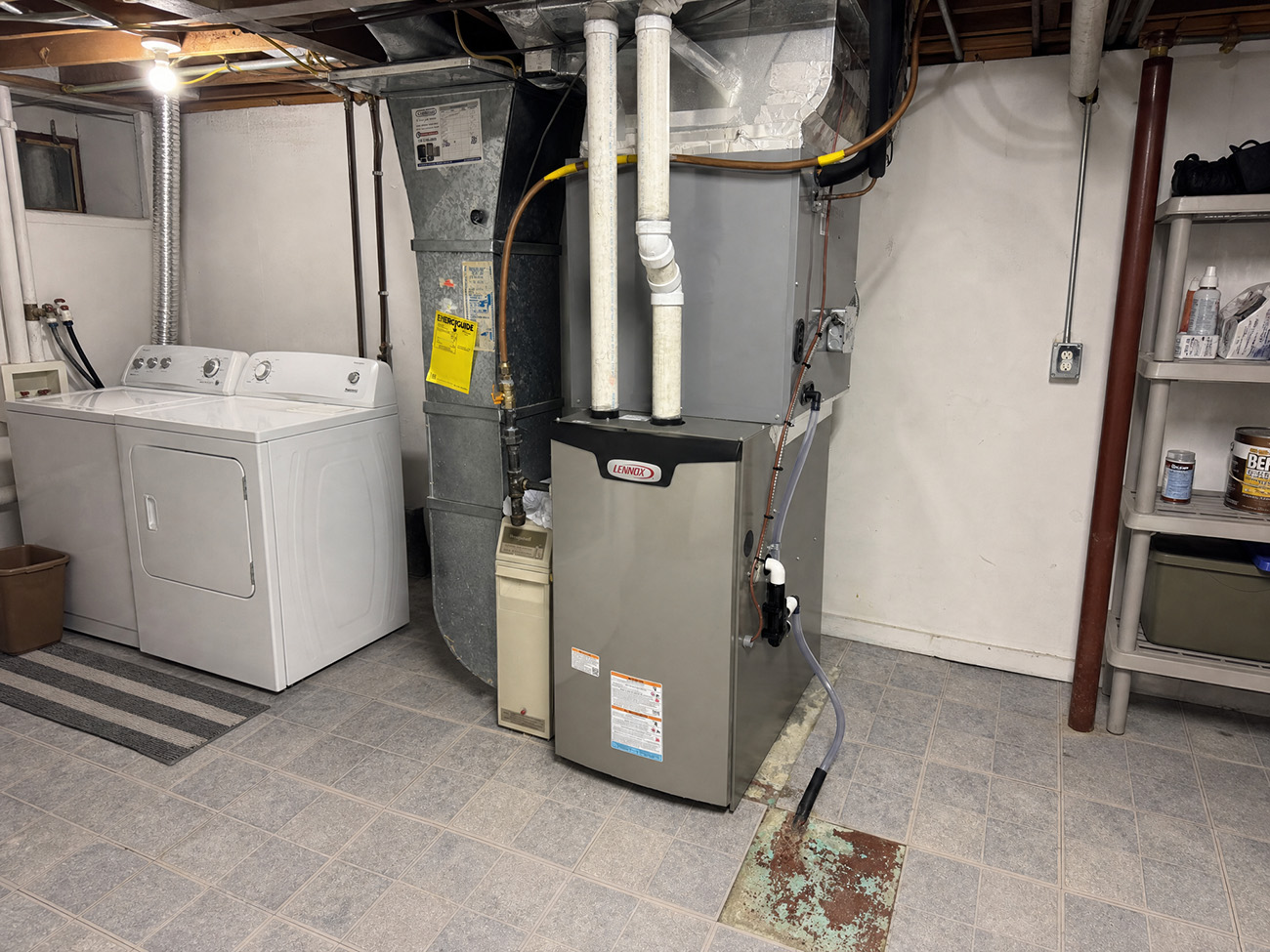
It was 11 p.m. on a night the wind chill hit minus 28. Burlington. A family with two kids under ten, house dropping a degree every hour, and the furnace stone dead. The dad had already been on the phone with two companies before he got us.
We want to tell you what we checked, in order, because these are the same checks you can do yourself — safely, without tools, without opening anything you shouldn’t. About a third of our no-heat calls end at step two or three. On a night like that, the difference between a five-minute fix and waiting hours for a tech is a big deal.
Step 1: The thermostat
Sounds insulting. Isn’t. Check that it’s set to HEAT (not COOL, not OFF — kids and houseguests change these), the set temperature is above the room temperature, and if it has batteries, they’re not dead. A blank thermostat screen in January is very often just AA batteries.
Step 2: The furnace power switch
This one fixes a shocking number of calls. Your furnace has a power switch that looks exactly like a regular light switch, usually mounted on the wall or the side of the furnace itself. In a dark basement, in a panic, or during a renovation, it gets flipped off by mistake. We’ve had grown adults nearly in tears with relief when we flip one switch and the furnace roars to life. Check it before anything else electrical.
Step 3: The breaker panel
Find the breaker labelled furnace and make sure it hasn’t tripped. If it tripped once and stays on after you reset it, fine — note it and mention it at your next service. If it trips again immediately, leave it off and call someone. That’s the electrical system telling you something is wrong.
Step 4: The filter
Pull the filter out and hold it up to a light. If you can’t see light through it, it’s strangling your furnace. A badly clogged filter can trip the high-limit safety switch — the furnace overheats internally and shuts itself down to protect itself. New filter, and many furnaces will reset on their own or after you cycle the power switch off and on.
Step 5: What the furnace is telling you
Stand by the furnace and have someone turn the thermostat up. Listen:
- Nothing at all? Power issue — back to steps 2 and 3.
- It starts up, runs for a few seconds, then shuts off? Classic dirty flame sensor. The furnace lights, can’t “see” the flame, and shuts down as a safety measure. Then it tries again. And again. This is the single most common real failure we see, and it’s a quick fix for a tech — but cleaning it involves opening the burner compartment, so this is where DIY stops.
- It’s running but blowing cold or lukewarm air? Could be a failed ignitor or a gas supply issue. Also a pro job.
Step 6: The winter-specific ones
High-efficiency furnaces vent through PVC pipes out the side of your house, and they produce water as they run. In deep cold, two things happen: the condensate drain line can freeze and back up, tripping a safety switch — and the exhaust vent outside can get buried in snow or capped with ice. We carry a photo on our phones of a vent completely sealed by an ice dam; the furnace had been short-cycling for a week before it quit entirely.
After any big snowfall, take a walk around the house and make sure those vents are clear. Thirty seconds with a broom has saved more than a few emergency calls.
What NOT to touch
Don’t open the burner compartment. Don’t touch the gas valve. Don’t poke at wiring or “reset” anything with a red button more than once. Gas and high voltage don’t give second chances, and a furnace that’s been tampered with is harder (and more expensive) for us to diagnose. Filters, switches, breakers, thermostats, and snow around the vent — that’s your territory. Everything inside the cabinet is ours.
The honest truth about no-heat calls
Most furnaces don’t die without warning. The flame sensor was getting weak for weeks. The filter was clogged for months. The vent was half-blocked since the last storm. An annual tune-up catches nearly all of it — We clean that sensor, check the drain, verify the venting, and test every safety switch before winter, when it’s convenient, instead of at midnight when it’s minus 28.
At First Choice Heating & Air Conditioning, we’re a TSSA-certified licensed HVAC contractor, and our technicians have been keeping the GTA warm for years. Keep a spare filter and a flashlight near your furnace, know where that power switch is before you need it, and you’ll handle the coldest night better than most.
Why Choose Us
We are leading HVAC company in GTA, specializing in the sales, installation, maintenance, and repairs of all HVAC units.