
How Much Does a New Furnace Cost in Ontario? (2026 Price Breakdown)
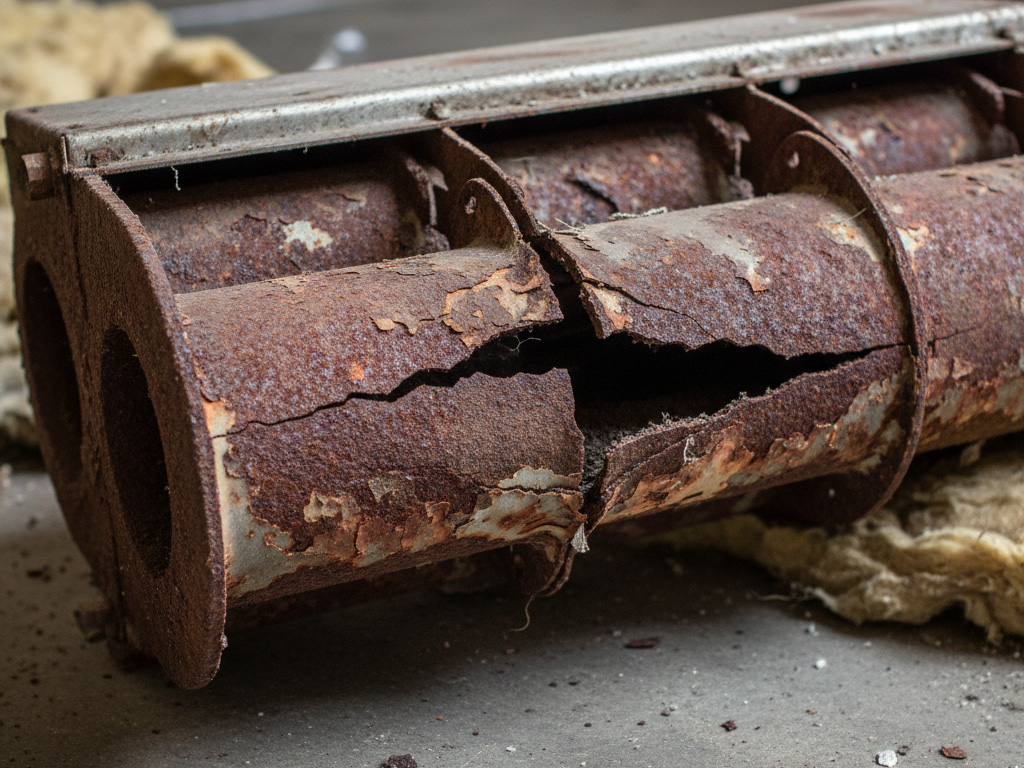
Rust-coloured streaks running down the heat exchanger. Hairline cracks you can see under a flashlight.
We showed the homeowner those photos right there on the basement floor in Mississauga. Twenty-two years old, that furnace. Ran fine until last Tuesday. No weird noises, no cold spots—just a CO detector going off at 2 AM that sent the whole family outside in their pyjamas. The cracked heat exchanger had been leaking combustion gases into the return air duct. For how long, nobody could say.
New furnace. Not a question of if — but how soon, and which setup is right for your home.
At First Choice Heating & Air Conditioning, we’re a TSSA-certified licensed HVAC contractor installing furnaces in Oakville, Mississauga, Burlington, and everywhere in between. After many years of quoting these jobs, we can tell you exactly what drives the price — and how to make sure the quote you get is a fair one.
Four Things That Determine Your Furnace Price
Efficiency rating (AFUE). Ontario mandates a minimum 95% AFUE for new gas furnace installations. Most units sit between 95% and 98%. That small gap trims a bit off your natural gas bill every year, while the higher-efficiency equipment costs more upfront. If you’re staying in the house ten-plus years, it’s usually worth it. Selling in three? Don’t bother.
Brand. Furnace brands cluster into different tiers. A Goodman and a premium Lennox might both carry a 96% AFUE rating, but the Lennox costs noticeably more. The gap pays for quieter operation, better blower technology, and longer warranty terms. Neither is objectively “better.” At First Choice Heating & Air Conditioning, we carry Goodman, Daikin, Lennox, Amana, Rheem, Clean Comfort, Rinnai, and Bradford White—so we match the brand to the house and the budget.
Heating capacity (BTU). Sized in BTUs per hour. A 1,500 sq ft bungalow in Burlington might need 60,000 BTU. A 2,500 sq ft two-storey in Oakville could require 80,000–100,000 BTU. Oversizing is the single most common mistake we see contractors make. An oversized furnace short-cycles—fires up, hits temperature in two minutes, shuts down. Wastes gas, wears components faster, leaves some rooms cold. Proper sizing through a Manual J calculation is the only way to get it right.
Installation complexity. A like-for-like swap—same size, same location, existing gas line and ductwork—is the cheapest install. Moving the furnace, converting from oil to gas, upgrading ductwork, or switching from a chimney vent to a PVC sidewall exhaust all add labour and materials. Some are necessary. Some get recommended because they bump up the quote.
Furnace Tiers: What Changes as You Move Up
Here’s what each tier typically covers — equipment, labour, permit, and disposal of the old unit — for a standard residential gas furnace installation across the Greater Toronto Area:
Budget Tier
Brands: Goodman, Amana, Clean Comfort
Efficiency: 95–96% AFUE, single-stage
What you get: Dependable, no-frills heating. Standard 10-year parts warranty. Single-stage means the furnace runs at full output or not at all. Effective, but not the quietest. The Goodman GMVC series in this range has been one of the most reliable units we’ve installed over the years. For homeowners who want solid heat without the premium markup, these units get the job done.
Mid-Range Tier
Brands: Daikin, Rheem, Amana, Clean Comfort
Efficiency: 96–97% AFUE, single or two-stage
What you get: Noticeably quieter operation, especially with two-stage models that loaf along at partial capacity most of the time and only ramp up on the coldest mornings. ECM blower motors that cut electricity consumption. Some models include basic humidity control. The Rheem Classic Plus series in this tier has been a solid performer across Oakville and Mississauga.
Premium Tier
Brands: Lennox SLP, Daikin DX, top Goodman models
Efficiency: 97–98% AFUE, modulating or variable-speed
What you get: The furnace adjusts its flame intensity continuously—like a dimmer switch instead of an on/off toggle. Near-silent operation. Temperature swings under 1°C. Compatible with zoning systems. These units also pair well with variable-speed AC or heat pump systems for a full upgrade.
According to Natural Resources Canada, high-efficiency furnaces with ECM blower motors reduce electricity consumption by up to 30% compared to older PSC motors. That’s a detail that gets overlooked when people are only looking at the gas bill.
Installation Costs: The Half Nobody Talks About
The equipment itself is roughly 40–50% of your total cost. The rest is labour, materials, and the extras that catch people off guard.
Standard labour for a straightforward replacement — pulling the old unit, connecting the new one, testing gas pressure, verifying combustion, programming the thermostat. More complex jobs take more time and more hands.
Venting conversion: If you’re going from an old mid-efficiency (80% AFUE) furnace to a high-efficiency (95%+) unit, the venting changes completely. Old units exhaust through a metal chimney liner. New ones use PVC pipe through your sidewall. The chimney liner either gets repurposed for the water heater or capped off. This conversion adds to the project when it’s needed.
Ductwork modifications: Older homes in Oakville’s heritage areas, parts of Mississauga, and North York sometimes have undersized return air ducts. A new furnace with a higher-capacity blower can make it worse—whistling vents, poor heating, stressed components. Duct modifications add to the cost when they’re needed. We’ll tell you straight if they are or aren’t.
Permits. Ontario requires a permit for furnace installations — the fee varies by municipality. Your contractor should pull this as part of the job. If they don’t mention permits, ask why. The HRAI recommends verifying that your contractor handles permitting as standard practice.
Rebates Available in 2026

A new high-efficiency furnace on its own qualifies for more modest rebates than a full heat pump system, but the savings aren’t nothing.
Ontario Home Renovation Savings Program: Check saveonenergy.ca for current furnace incentives. Eligibility and amounts depend on the equipment and your local utility.
Enbridge Gas rebates: Enbridge offers rebates on qualifying high-efficiency furnaces, especially when paired with other upgrades. Apply directly after installation—no pre-qualification EnerGuide required. Current amounts at enbridgegas.com/rebates. These programs update without much notice.
Combined savings: Stack the provincial and utility rebates and you can reduce your out-of-pocket cost by a meaningful amount. Exact numbers depend on what you’re installing, but it’s worth checking before you commit. Natural Resources Canada’s EnerGuide program publishes current eligibility requirements—program budgets can close without notice.
First Choice Heating & Air Conditioning handles all rebate paperwork for every heating installation we do. Call 905-334-7885 and we’ll confirm what’s available for your situation.
How Long Should a Furnace Last in Ontario?
Fifteen to twenty-five years, if it’s maintained properly. Maintenance is the whole ball game. The TSSA requires annual inspections for certain fuel gas systems—your furnace falls under that umbrella.
Annual tune-ups—checking the flame sensor, cleaning the burner assembly, inspecting the heat exchanger, testing the gas valve—keep the system safe and efficient. We’ve seen Goodman furnaces hit twenty years without a major repair because the homeowner never skipped a service call. We’ve also seen premium units fail at twelve years because they were ignored.
After fifteen years, components start going more often. Inducer motors, flame sensors, ignition controls, blower capacitors—they all have a shelf life. When you’re paying for individual repairs every year, replacement starts making financial sense.
The heat exchanger is the hard line. Cracked heat exchanger, furnace comes out immediately. No discussion. It can leak carbon monoxide into your living space—the exact scenario from the story that opened this article.
Why Labour Warranty Matters More Than You Think
Here’s something most homeowners don’t think about. Parts warranty comes from the manufacturer—ten years, standard. But the labour to replace those parts? That’s on you—unless your dealer offers a labour warranty.
First Choice is a Goodman Private Label Plus Dealer. That means we can offer 5-year or 10-year extended labour warranties on select Goodman furnace models. Most companies cover labour for one year, maybe two. After that, a blower motor replacement means paying full labour on top of the parts. Over a ten-year span, that adds up fast.
We also hold Rinnai Pro certification for tankless water heaters—relevant because many homeowners upgrade both at the same time. One crew, one day, two systems sorted.
FAQ
How long does a furnace installation take?
Four to eight hours for a straightforward replacement, done in a single day. If venting conversion or duct modifications are needed, plan for a full day. Complex installs with electrical upgrades might stretch into a second day. We’ll give you a time estimate before we start so you’re not caught off guard.
Can I finance a new furnace?
Yes. We offer financing with terms from 12 to 120 months. Some manufacturers run 0% promotions through authorized dealers at different times of year. We’ll show you what’s available when we put your quote together.
Should I replace my furnace and air conditioner at the same time?
If both units are past fifteen years, yes. The systems share ductwork, the thermostat, and often the blower motor. A mismatched setup—new furnace with a fifteen-year-old AC—underperforms. Bundling also saves on labour since the crew is already on site.
What’s the difference between single-stage, two-stage, and modulating?
Single-stage runs at 100% or off. Two-stage runs at about 65% most of the time and kicks to 100% on the coldest days. Modulating adjusts continuously from roughly 40% to 100%. For most GTA homes, two-stage is the sweet spot—noticeably quieter than single-stage, without the premium of modulating.
Is it worth upgrading from 95% to 98% AFUE?
The 3% efficiency gain trims a modest amount off your gas bill each year. The equipment premium takes several years to pay back. If you’re in the house long-term and want quieter operation (98% models tend to be modulating), go for it. Selling in five years? Put the money elsewhere.
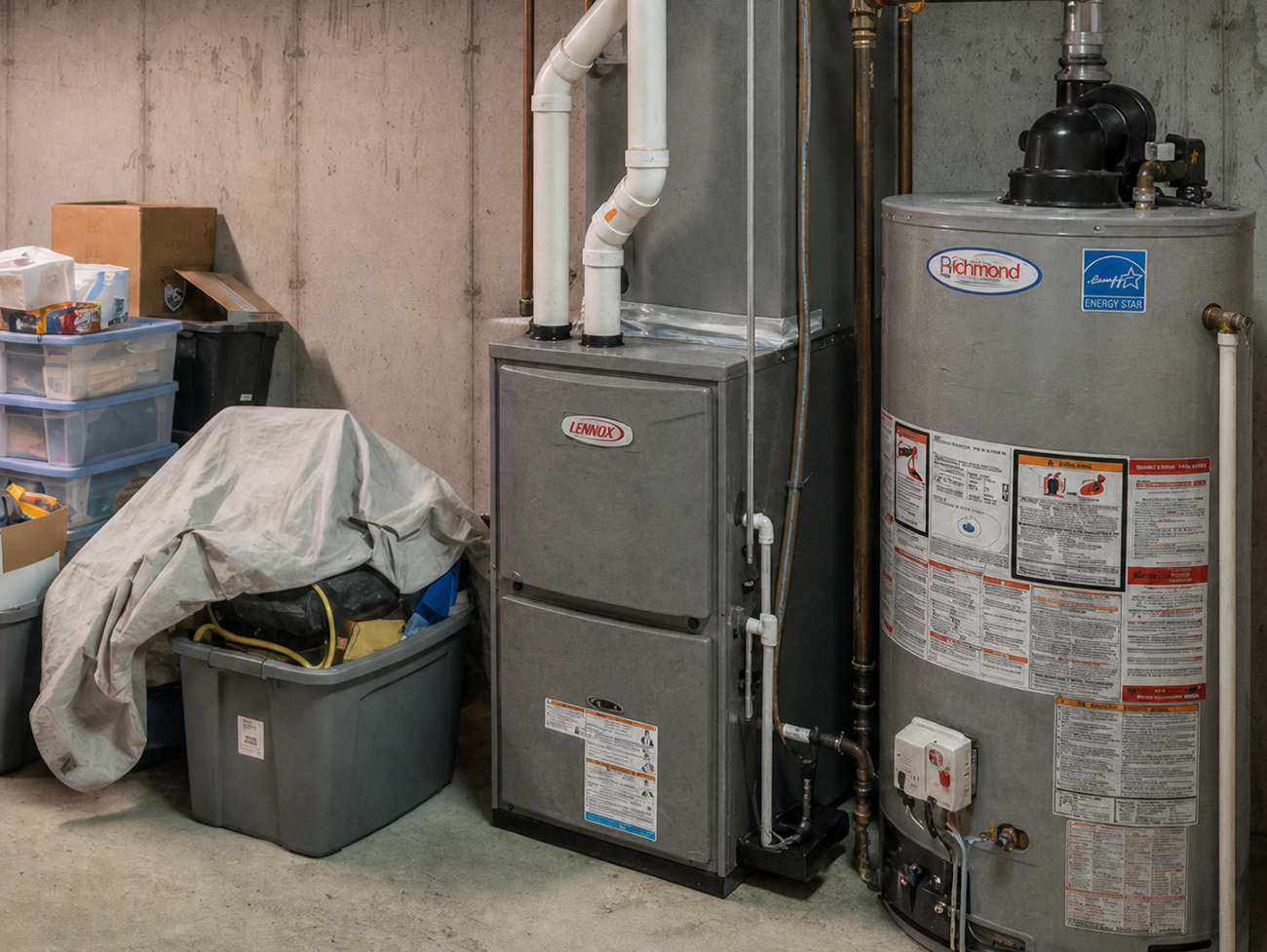
Walk downstairs and check the rating plate on your furnace. Metal sticker on the side or inside the front panel. Model number, AFUE rating, manufacture date—everything’s right there. If that date shows anything before 2005, you’re running a twenty-year-old system that’s almost certainly burning more gas than its nameplate claims.
Ready for an honest assessment? Call First Choice Heating & Air Conditioning at 905-334-7885 or request a free quote online. A TSSA-certified licensed HVAC contractor serving Oakville, Mississauga, Burlington, and the GTA for many years. As a Goodman Private Label Plus Dealer, we offer 5-year or 10-year labour warranties on select models—something most companies can’t match. We’re also Rinnai Pro certified. Every installation is done by our own technicians—never subcontracted. Available 24/7 for emergencies. Book a free on-site assessment: we’ll inspect your current system, give you the straight story, and show you exactly what a new one would cost — line by line, no guesswork.
About First Choice Heating & Air Conditioning: First Choice Heating & Air Conditioning provides residential heating and cooling services in Oakville and surrounding GTA communities, including furnace, air conditioning, heat pump, ductwork, water heater, and indoor air quality services.
Why Choose Us
We are leading HVAC company in GTA, specializing in the sales, installation, maintenance, and repairs of all HVAC units.