
Heat Pump vs. Furnace in Canada: Which One Actually Saves You More Money?
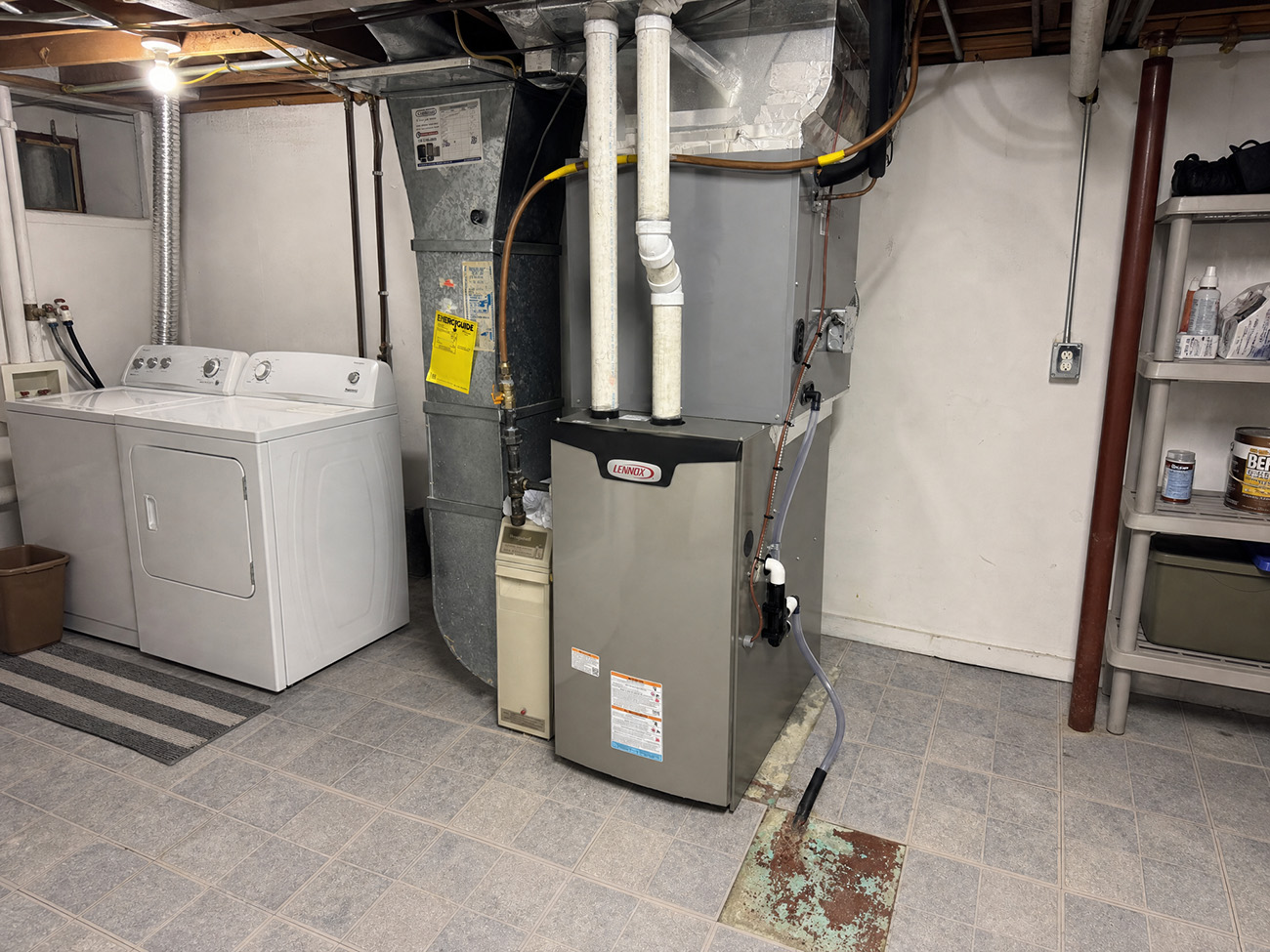
We got a call last January from a homeowner in Burlington. His Enbridge bill had hit $340 for the month. Same house, same thermostat setting as the year before, but his 15-year-old furnace was gasping. The flame sensor needed cleaning every few weeks, the inducer motor rattled like an old Maytag on spin cycle, and the 90% AFUE rating on the nameplate was being generous.
His neighbour across the street had gone with an air source heat pump two winters earlier. Her January heating bill? $185 on hydro. No gas charge at all.
That got his attention, and it gets a lot of people’s attention around here. At First Choice Heating & Air Conditioning, we’re a TSSA-certified licensed HVAC contractor. Our technicians have installed both furnaces and heat pumps in many homes across Oakville, Mississauga, Burlington, and the GTA. Whether a heat pump actually saves you money over a furnace in Canada depends on things most online calculators skip right past. Let us walk you through what actually matters.
How a Furnace Heats Your Home
A gas furnace burns natural gas inside a sealed combustion chamber. Flames heat up a metal heat exchanger, and your blower motor pushes household air across that hot metal to warm it before sending it through your ductwork.
Today’s high-efficiency furnaces rated at 96% or higher AFUE turn 96 cents of every gas dollar into usable heat. The rest goes out the flue. For a combustion appliance, that’s impressive. Brands like Lennox, Daikin, Goodman, and Rheem all offer 96 to 98% AFUE models with solid 10-year parts warranties.
Natural gas through Enbridge runs roughly $0.25 to $0.35 per cubic metre depending on your rate plan and where the market sits. For a typical 2,000 sq ft home across the GTA, winter gas heating bills land between $200 and $400 per month from December through February. Ontario electricity and gas rates are regulated and published by the Ontario Energy Board, which is worth checking when you’re running your own numbers. You can also compare historical rate trends through Ontario’s Independent Electricity System Operator.
How a Heat Pump Heats Your Home
A heat pump doesn’t generate heat. It moves it. Even at -10°C outside, there’s still thermal energy in the outdoor air. The heat pump pulls that heat out and transfers it indoors using a refrigerant cycle, which is the same principle your fridge uses, just flipped around.
On paper the efficiency advantage is real. A modern cold-climate heat pump running at mild temperatures (say 5°C to 10°C) hits a COP (Coefficient of Performance) of 3.0 to 4.0. That means every dollar of electricity buys you three to four dollars worth of heat. No combustion appliance can touch that ratio.
Here’s the catch. As the outdoor temperature drops, so does the efficiency. At -15°C, COP drops to about 2.0. At -25°C, most air source heat pumps need supplemental heat, either electric resistance strips or, in a dual-fuel setup, your gas furnace kicks in for the coldest stretches.
The Real Cost Comparison for Ontario

Let’s skip the theoretical stuff and talk about what GTA homeowners actually pay.
Gas furnace (96% AFUE):
– Equipment and installation: $3,500 to $6,000
– Annual heating cost: $1,400 to $2,200 (gas plus electricity for the blower)
– Maintenance: $150 to $200 per year
Cold-climate air source heat pump:
– Equipment and installation: $7,000 to $12,000
– Annual heating cost: $1,000 to $1,800 (electricity only)
– Maintenance: $200 to $350 per year
The math: A heat pump saves $400 to $700 per year in operating costs but costs $3,500 to $6,000 more upfront. That’s a simple payback of 5 to 10 years. Factor in available rebates (up to $10,500 in combined Ontario provincial and Enbridge incentives) and that payback drops to 2 to 4 years.
The wildcard is electricity prices versus gas prices. Ontario electricity rates have climbed faster than gas over the past decade. If that keeps up, the heat pump’s operating advantage narrows. If carbon taxes keep pushing gas higher, the advantage widens. Nobody can predict energy prices with certainty, and that’s exactly why dual-fuel exists.
The Dual-Fuel Setup: Best of Both Worlds
A dual-fuel system pairs a heat pump with a gas furnace. The heat pump handles heating through fall and early winter, that mild range where it runs three to four times more efficiently than gas combustion. When the temperature drops below a set point, typically -10°C to -15°C, the system automatically switches over to the furnace.
This setup captures the heat pump’s efficiency for 70 to 80% of the heating season while dodging its weakness in extreme cold. For most of the GTA, where temperatures below -15°C only account for 15 to 25 days per winter, dual-fuel makes solid financial sense.
Dual-fuel cost:
– Equipment and installation: $10,000 to $16,000
– Annual heating cost: $800 to $1,400 (gas plus electricity)
– Rebate eligibility: up to $10,500 (the heat pump qualifies independently for Ontario provincial plus Enbridge incentives)
The higher upfront cost pays off through the lowest annual operating cost you can get. And since you keep the gas furnace as backup, you’re never left without heat, even if the heat pump goes down mid-January.
Natural Resources Canada confirms that cold-climate heat pumps paired with gas furnace backup represent the most energy-efficient residential heating approach available in Canada’s climate zones right now.
When a Furnace Is Still the Right Call
Heat pumps aren’t the better choice for every situation. Here are three cases where sticking with a gas furnace makes more sense.
Your current furnace is under 10 years old and running fine. Replacing a perfectly good furnace to chase operating savings rarely pencils out. Maintain it, ride it out, and plan your heat pump upgrade for when the furnace actually needs replacing.
Your electrical panel can’t handle the load. A heat pump draws serious power. If your home is on a 100-amp panel that’s already near capacity, you’ll need an electrical upgrade ($1,500 to $3,000) before the heat pump goes in. That shifts the payback math considerably.
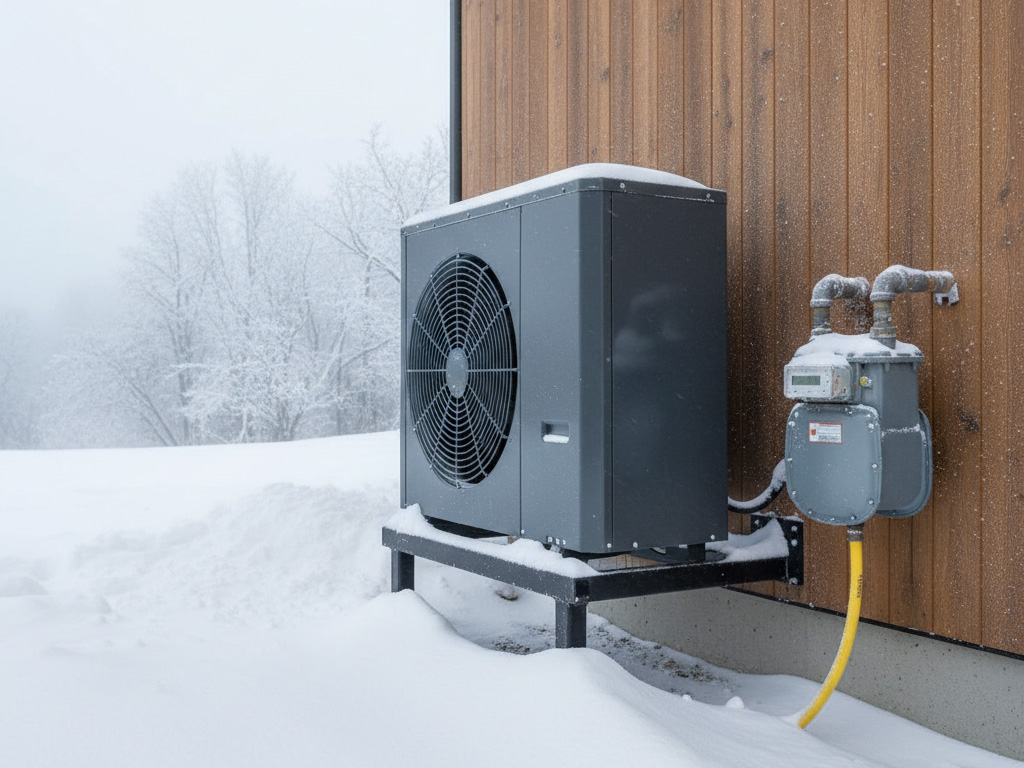
You’re in an area with extreme cold and no wind protection. Northern Ontario communities that hit -30°C for weeks at a time push air source heat pumps to their limit. Supplemental heating kicks in so often that the efficiency advantage almost disappears. For those areas, a high-efficiency furnace from Bradford White or Lennox is still the practical pick. Ground source (geothermal) heat pumps work in any climate but run $20,000 to $35,000 installed. For more on how heat pumps perform in different climate zones, the Canadian GeoExchange Coalition publishes helpful technical references.
When a Heat Pump Wins Clearly
Your furnace is 15+ years old and fading. You’re replacing equipment either way. The cost difference between a new furnace and a heat pump, after rebates, might be smaller than you think.
You want heating and cooling from one system. A heat pump heats in winter and cools in summer. If your central AC is also getting old, replacing both with a single heat pump means buying one piece of equipment instead of two. Here at First Choice, we install cold-climate heat pump models from Daikin, Lennox, Goodman, Amana, and Clean Comfort that handle heating down to -25°C and deliver full cooling through the summer.
Rebates are available right now. The current incentive programs make 2026 one of the best years in recent memory to make the switch. That $10,500 in combined Ontario provincial and Enbridge incentives won’t last forever. Both NRCan and the HRAI maintain updated lists of qualifying equipment and active programs.
FAQ
Can a heat pump heat my house at -20°C?
Yes. Cold-climate models are rated to operate down to -25°C or lower. Efficiency drops in extreme cold, but they still produce heat. Daikin and Lennox cold-climate units maintain rated capacity at -25°C, and most GTA winters rarely push that far.
Will I still need a furnace with a heat pump?
Not necessarily. A cold-climate heat pump with electric backup strips can handle a GTA winter on its own. That said, many homeowners prefer the dual-fuel approach: heat pump as primary, gas furnace as backup for the worst cold snaps. It gives you the best efficiency and peace of mind.
Is a heat pump louder than a furnace?
The outdoor unit puts out noise similar to a central AC condenser, a steady hum around 55 to 65 dB. Modern variable-speed models from brands like Amana and Rheem run even quieter. Inside, the air handler sounds about the same as a furnace blower. Most people don’t notice a difference.
How long does a heat pump last compared to a furnace?
Both run 15 to 20 years with proper maintenance. Heat pumps operate year-round for heating and cooling, so some components see more use. Annual service, including refrigerant checks, coil cleaning, and electrical inspections, helps them reach that full 20-year lifespan.
What about hot water — does a heat pump cover that?
Standard ducted heat pumps handle space heating and cooling only. For water heating, a tankless unit like the Rinnai line is a separate piece of equipment. Some homeowners pair a heat pump with a Rinnai tankless for a fully efficient setup, and the two systems work well together.
Pull out your last 12 months of Enbridge gas bills and 12 months of hydro bills. Add them up separately. That combined annual number is your real heating and cooling cost, and it’s the only honest starting point when you’re comparing a furnace replacement against a heat pump.
Want us to run the numbers for your specific home? Call First Choice Heating & Air Conditioning at 905-334-7885 or request a free quote online. We’re a TSSA-certified licensed HVAC contractor, and we’ve been serving Oakville, Mississauga, Burlington, and the GTA for many years. As a Goodman Private Label Plus Dealer and Rinnai Pro dealer, every install is handled by our own in-house technicians, 24/7. We install both systems and we’ll walk you through the math without the sales pitch.
About First Choice Heating & Air Conditioning: First Choice Heating & Air Conditioning provides residential heating and cooling services in Oakville and surrounding GTA communities, including furnace, air conditioning, heat pump, ductwork, water heater, and indoor air quality services.
Why Choose Us
We are leading HVAC company in GTA, specializing in the sales, installation, maintenance, and repairs of all HVAC units.