
Cold Climate Heat Pumps in Ontario: Do They Actually Work at -25°C?
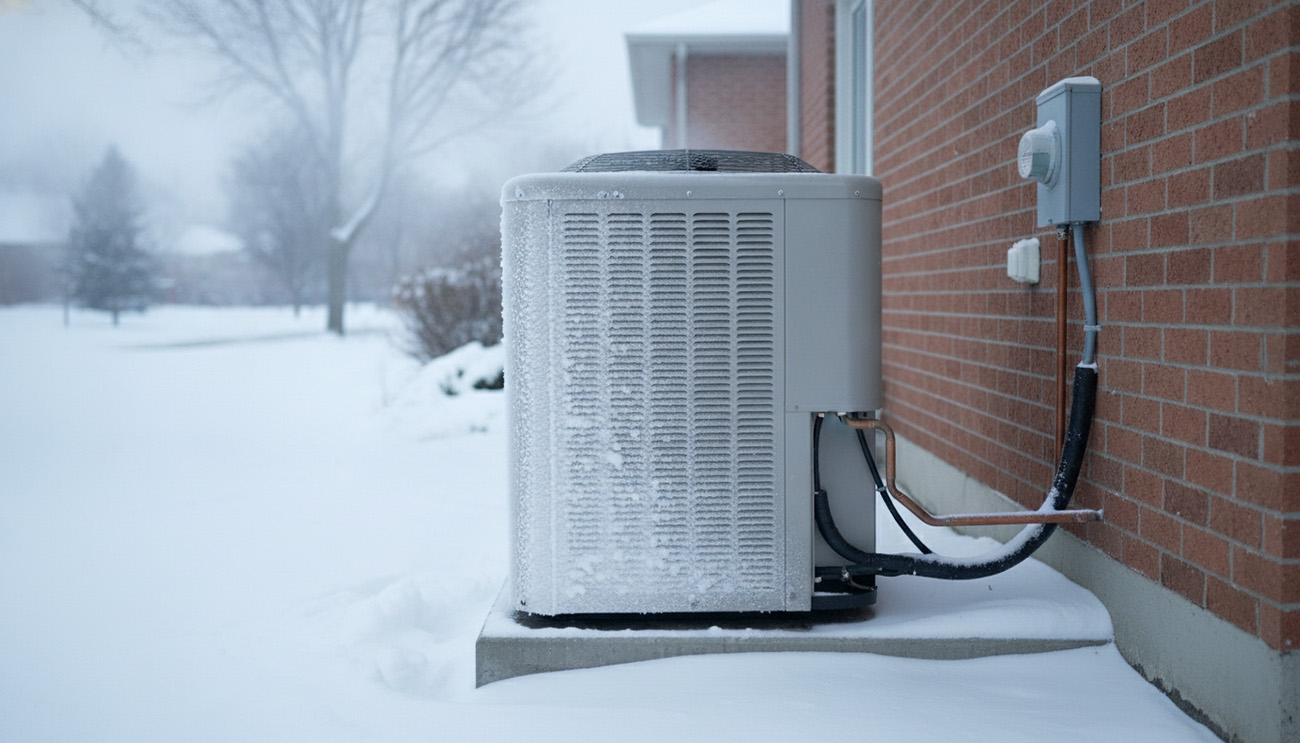
Five years ago, if a homeowner in Oakville asked us about using a heat pump as their primary heat source, we’d have steered them toward a gas furnace. Standard heat pumps dropped off a cliff around -8°C — below that, they limped along on electric backup strips or shut down entirely.
Then cold climate models hit the Canadian market, and we had to rethink what we knew. At First Choice Heating & Air Conditioning, we’re a TSSA-certified licensed HVAC contractor, and our technicians have installed and serviced many different heating systems across Oakville, Mississauga, Burlington, and the GTA. Let us walk you through how cold climate heat pumps actually work in Ontario winters, and whether they deserve a serious look.
How a Heat Pulls Heat from Freezing Air
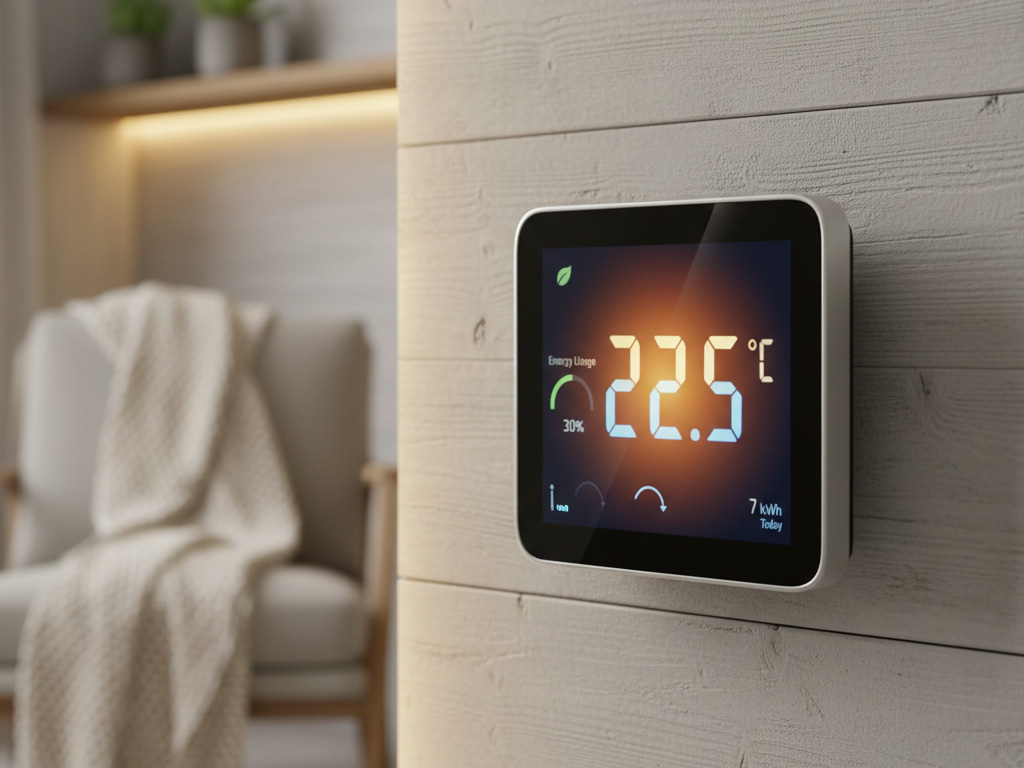
This part confuses a lot of people, and we get why. How do you extract heat from air that’s sitting at -15°C? The short answer: because -15°C is nowhere close to absolute zero.
Absolute zero — the point where all molecular motion stops and there’s genuinely zero thermal energy — sits at -273°C. At -15°C, the outdoor air still holds a massive amount of thermal energy relative to that baseline. Your heat pump uses a refrigerant cycle to absorb that energy, compress it to concentrate it, and release it inside your home.
Think of it like wringing out a dishcloth. Even a cloth that doesn’t feel wet still holds water if you squeeze hard enough. The compressor in a heat pump is what does the squeezing — it pressurizes the refrigerant so it can absorb heat from air that feels ice-cold to your skin.
Standard heat pumps used single-speed compressors that couldn’t build enough pressure to work efficiently when temperatures really dropped. Cold climate units use variable-speed or two-stage compressors that ramp up intensity as it gets colder. More compression means more heat extraction from colder air.
What Makes It a “Cold Climate” Heat Pump
Not every heat pump sold in Canada qualifies. Natural Resources Canada maintains strict performance criteria that separate cold climate models from standard units. The key benchmarks:
- Must maintain heating capacity at -15°C with a COP (Coefficient of Performance) of at least 1.75
- Must operate continuously down to -25°C without shutting down
- Must carry an HSPF2 (Heating Seasonal Performance Factor) rating of 7.1 or higher
Standard heat pumps typically stop producing useful heat between -5°C and -10°C. At that point they either shut down or switch to electric resistance backup — which heats your house fine but costs three to four times as much to run.
Cold climate units keep producing heat well below -15°C. The efficiency drops as it gets colder, but even at -20°C, a quality cold climate heat pump delivers heat at roughly twice the efficiency of electric resistance or a propane furnace. Brands that have earned their reputation in cold weather performance include Daikin’s Fit series, the Goodman DVC series, and Lennox’s cold climate lineup. We install these at First Choice, and each one is rated for continuous operation at -25°C or below.
Real Performance in an Ontario Winter
Here’s the part that actually matters to homeowners. What does this look like in practice across the GTA?
The GTA’s average January temperature sits around -4°C to -7°C. In that range, a cold climate heat pump runs at peak efficiency — COP of 2.5 to 3.5. That means you get $2.50 to $3.50 worth of heat for every dollar of electricity. No gas combustion appliance comes close to that ratio.
The extreme cold snaps below -20°C do happen, but they’re episodic. In a typical GTA winter, you might see 10 to 15 days total where the mercury drops below -15°C. During those stretches, the heat pump still runs, just at lower efficiency with a COP around 1.8 to 2.0. That’s still better than electric baseboard heating and gets competitive with gas when you factor in carbon tax increases stacking on Enbridge bills year after year.
A homeowner in Mississauga had us install a Goodman cold climate unit two winters ago. Her total heating electricity cost from November through March was roughly $1,100. The previous winter on her old gas furnace, she’d paid $2,300 in gas alone. The HRAI has documented similar results across Ontario — 40 to 60% heating cost reductions depending on insulation quality and local electricity rates. That lines up with what Natural Resources Canada has found in their field monitoring programs.
The Defrost Cycle: What First-Time Owners Need to Know
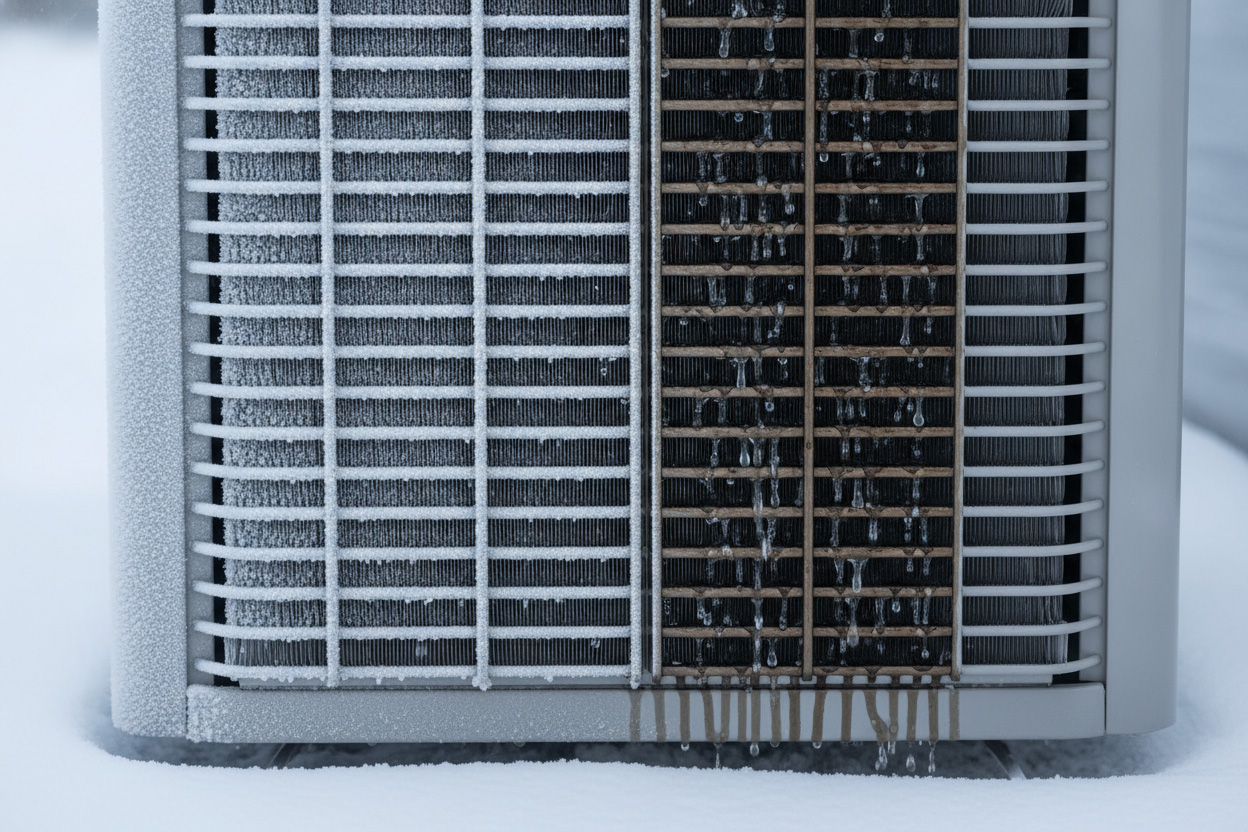
When outdoor temperatures sit between -5°C and 5°C with high humidity, frost builds up on the outdoor coil. The system periodically reverses its cycle for two to five minutes to melt that frost off. During this time, the outdoor unit stops heating and you may see steam rising from it.
From inside the house, you might feel slightly cooler air from the vents for a few minutes. That’s completely normal — the system switches back to heating mode automatically once the frost clears. If you walk outside on a cold morning and see steam billowing off your heat pump, that’s actually a sign everything is working exactly right.
Where it becomes a problem: if the defrost cycle runs constantly, or if ice builds up on the unit and doesn’t clear, the outdoor coil may have a refrigerant charge issue or a faulty defrost sensor. That needs a technician. It’s the most common cold-weather service call we get, and it’s usually a straightforward fix.
Can a Cold Climate Heat Pump Replace Your Furnace Entirely?
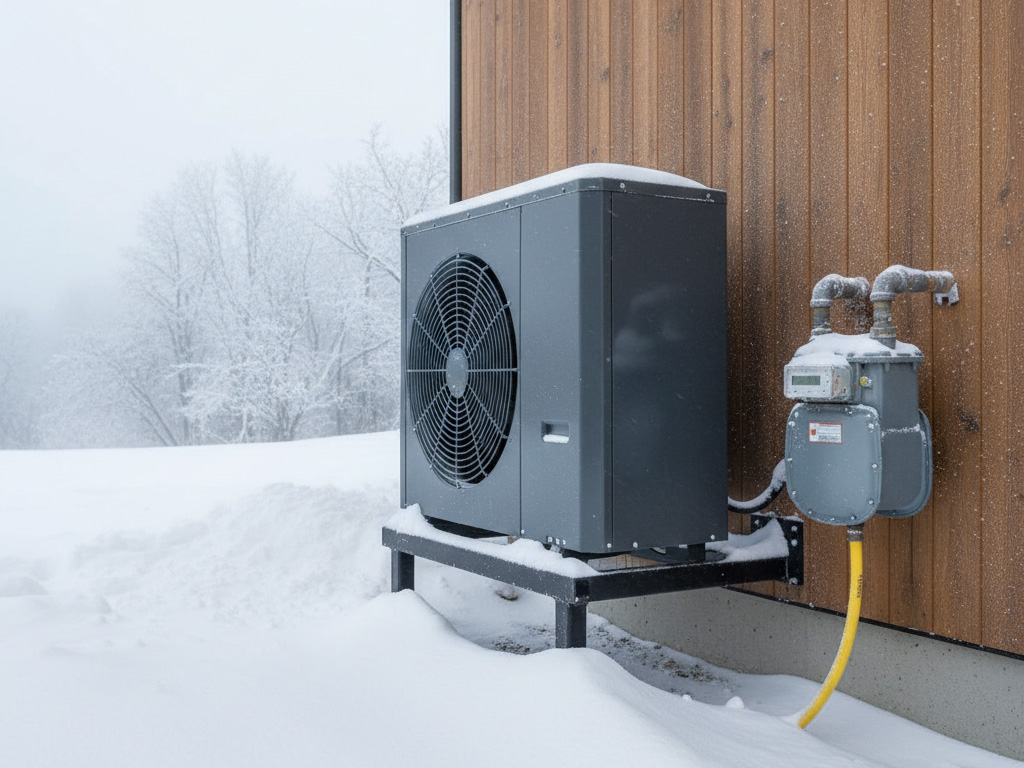
This is the question everyone really wants answered. And the honest answer is: it depends on your house and your comfort tolerance.
Homes that can go all-electric successfully:
– Well-insulated homes with good attic insulation and sealed air barriers
– Homes with adequate electrical capacity (200-amp panel or a 100-amp panel with room to spare)
– Homeowners comfortable relying on electric backup strips for the handful of days below -25°C
Homes where dual-fuel still makes more sense:
– Older homes with drafty envelopes and uneven insulation
– Homes on 100-amp panels already near capacity
– Homeowners who want gas backup as insurance during extended cold snaps
In the GTA, dual-fuel — heat pump as primary heat, gas furnace as backup — offers the most reliable setup. The heat pump handles 80% of your heating hours at a fraction of the energy cost. The furnace covers those extreme cold stretches where efficiency drops. You get the savings without the risk.
Brands like Amana, Rheem, and Clean Comfort all offer cold climate models that pair well with existing gas furnaces at different price points.
Sizing and Installation for Ontario Homes
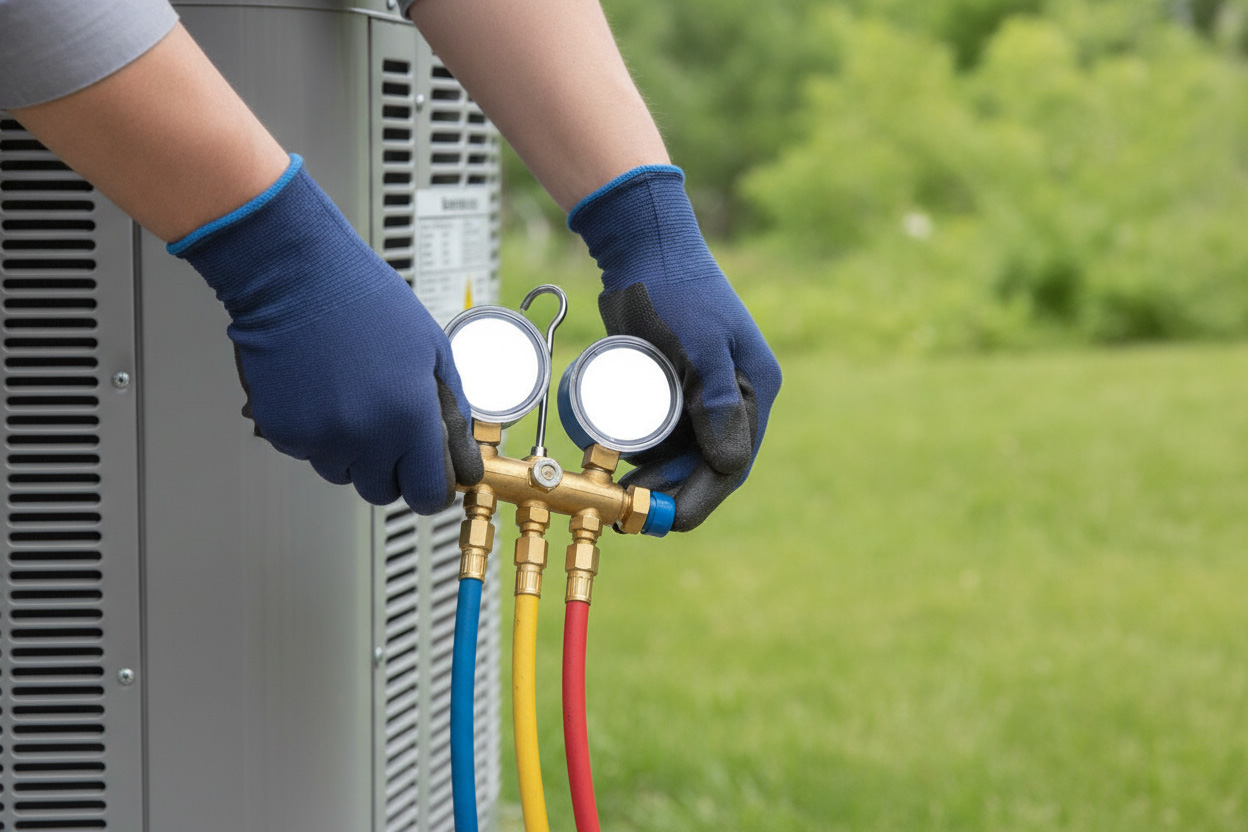
Sizing matters with heat pumps. An undersized unit leans on backup heat during cold snaps, wiping out the efficiency advantage. An oversized unit short-cycles in mild weather.
For GTA homes, proper sizing follows a Manual J heat load calculation. The critical difference with a heat pump: it needs to handle your home’s heating demand at the local design temperature, roughly -18°C to -22°C for southern Ontario. Most 2,000 sq ft homes in the GTA need a 3 to 4 ton cold climate heat pump to maintain comfort independently.
Electrical requirements: A cold climate heat pump draws more power than a standard AC condenser. Most residential units need a 40 to 60 amp dedicated circuit at 240V. If your panel is already maxed out, you’ll need an electrical upgrade before installation — typically $1,500 to $3,000. The Ontario Energy Board publishes current electricity rate schedules worth reviewing when you’re weighing the operating costs.
Outdoor unit placement: The unit needs adequate clearance for airflow and snow management. We recommend elevating it on a stand 12 to 18 inches above ground to stay above snow accumulation. In areas of Burlington and Oakville prone to drifting, a wind barrier on the prevailing wind side helps cut down on frost buildup.
Not sure if your home is a good fit? First Choice Heating & Air Conditioning offers free on-site assessments — we’ll check your electrical capacity, existing ductwork, and insulation before recommending any system.
What Does It Cost?

Installed pricing for a cold climate heat pump in Ontario runs between $7,000 and $14,000, depending on brand, size, and installation complexity. After Ontario provincial and Enbridge rebates — up to $10,500 through the Ontario Home Renovation Savings Program — the effective cost can drop to $3,500 to $8,000. Both NRCan and the HRAI maintain updated lists of qualifying equipment and active rebate programs. That’s competitive with a high-end furnace plus AC combo, especially when you factor in the ongoing energy savings.
FAQ
Will my electricity bill double if I switch to a heat pump?
Your hydro bill will go up, but your gas bill drops significantly or disappears entirely in an all-electric setup. Most GTA homeowners see a 30 to 50% reduction in total heating costs. The exact number depends on your current gas rates, electricity rates, and the heat pump’s efficiency at your typical winter temperatures.
Can I keep my existing ductwork?
Yes. Cold climate heat pumps connect to your existing duct system the same way a central AC does. If you have a furnace with ductwork already in place, the transition is straightforward. The heat pump replaces or supplements the furnace as the heat source, using the same ducts and blower.
How noisy is a cold climate heat pump in winter?
Modern variable-speed units run at 55 to 65 dB at full capacity — about the volume of a normal conversation. At partial load, which is most of the time during mild weather, they’re quieter. The defrost cycle is the loudest phase, producing a brief whooshing sound as the system reverses. Neighbours standing 15 feet away typically don’t notice.
What happens during a power outage?
The heat pump stops, same as any electric system. If you have a dual-fuel setup, the gas furnace also needs electricity for the igniter and blower — it won’t run without power either. A backup generator or battery system is the only reliable way to keep heating going during an outage, regardless of what equipment you have installed.
Can I go completely off gas with a heat pump?
You can, and some homeowners do. An all-electric setup with a cold climate heat pump and electric backup strips handles a GTA winter. You’ll also need an electric water heater — a Rinnai tankless or a Bradford White electric tank. Going off gas eliminates your Enbridge bill entirely, but your hydro bill becomes the whole show. For most homeowners, dual-fuel is the safer bet, especially in older homes.
Step outside during the next cold snap and hold your hand in the air for ten seconds. That sting you feel? There’s thermal energy in it. A cold climate heat pump is engineered to capture exactly that, and the technology has gotten good enough that it’s no longer a gamble for Ontario homeowners.
Want to know if your home is a good candidate? Call First Choice Heating & Air Conditioning at 905-334-7885 or request a free quote online. TSSA-certified, with many years serving Oakville, Mississauga, Burlington, and the GTA, we’ll assess your current system, your electrical capacity, and your insulation — then tell you straight whether the numbers work. As a Goodman Private Label Plus Dealer and Rinnai Pro dealer, every installation is completed by our own experienced technicians, 24/7.
Why Choose Us
We are leading HVAC company in GTA, specializing in the sales, installation, maintenance, and repairs of all HVAC units.