
How Much Does a Central Air Conditioner Cost in Ontario? (2026 Guide)
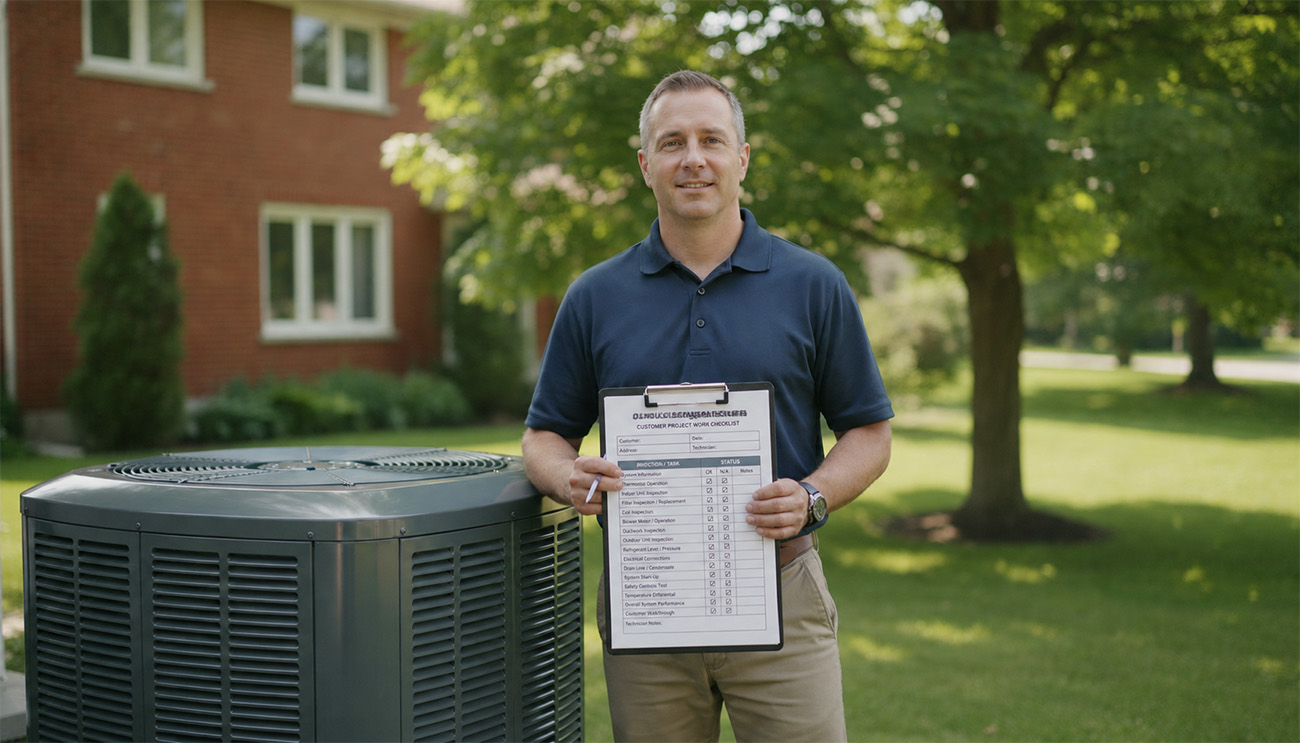
Three quotes, three wildly different numbers. That’s what a homeowner in Oakville ran into last spring when she started shopping for a new central AC. Same house, same square footage — yet every contractor seemed to be pricing a different job. She called us confused, wondering if someone was trying to rip her off.
Nobody was. At First Choice Heating & Air Conditioning, our certified gas technician team has installed air conditioners across the GTA for years. Our technicians have replaced a great many condensers across Oakville, Mississauga, Burlington, and everywhere in between. The pricing gap in central air conditioning isn’t some scam. It comes down to a handful of variables that most homeowners don’t think about until they’re standing in their driveway staring at a dead unit in the middle of a July heat wave.
Let us walk you through what actually drives the cost, which factors matter most for your home, and how to get an accurate number for your place — without the guesswork.
What Actually Determines the Price Tag
The final number on your invoice depends on four things: the size of the unit, the efficiency rating, the brand, and how complicated the installation is. Change any one of them and the price moves.
Unit size is measured in tons — and no, that’s not weight. It’s cooling capacity. A typical three-bedroom home in the GTA needs a 2.5 to 3.5-ton unit. Go too small and your system runs nonstop without ever hitting your set temperature. Go too large and it short-cycles, which beats up components faster and leaves your home feeling clammy because the system never runs long enough to pull humidity out of the air.
Efficiency ratings use the SEER2 scale (Seasonal Energy Efficiency Ratio). Ontario’s minimum is 14.3 SEER2 as of 2023. Most mid-range units fall between 15 and 17 SEER2. Premium models from brands like Lennox and Daikin push past 20 SEER2. Every step up in efficiency saves on your monthly hydro bill but adds to the upfront price. The sweet spot for most homeowners in Oakville and the GTA tends to land around 16–17 SEER2. According to Natural Resources Canada, certified units can save up to 8% on cooling costs compared to conventional models.
Brand selection matters more than most people realize. Two units with the same 16 SEER2 rating can be priced quite differently depending on the badge. What you’re really paying for is build quality, compressor technology, and noise levels. Both carry standard 10-year parts warranties.
Three Equipment Tiers Worth Knowing
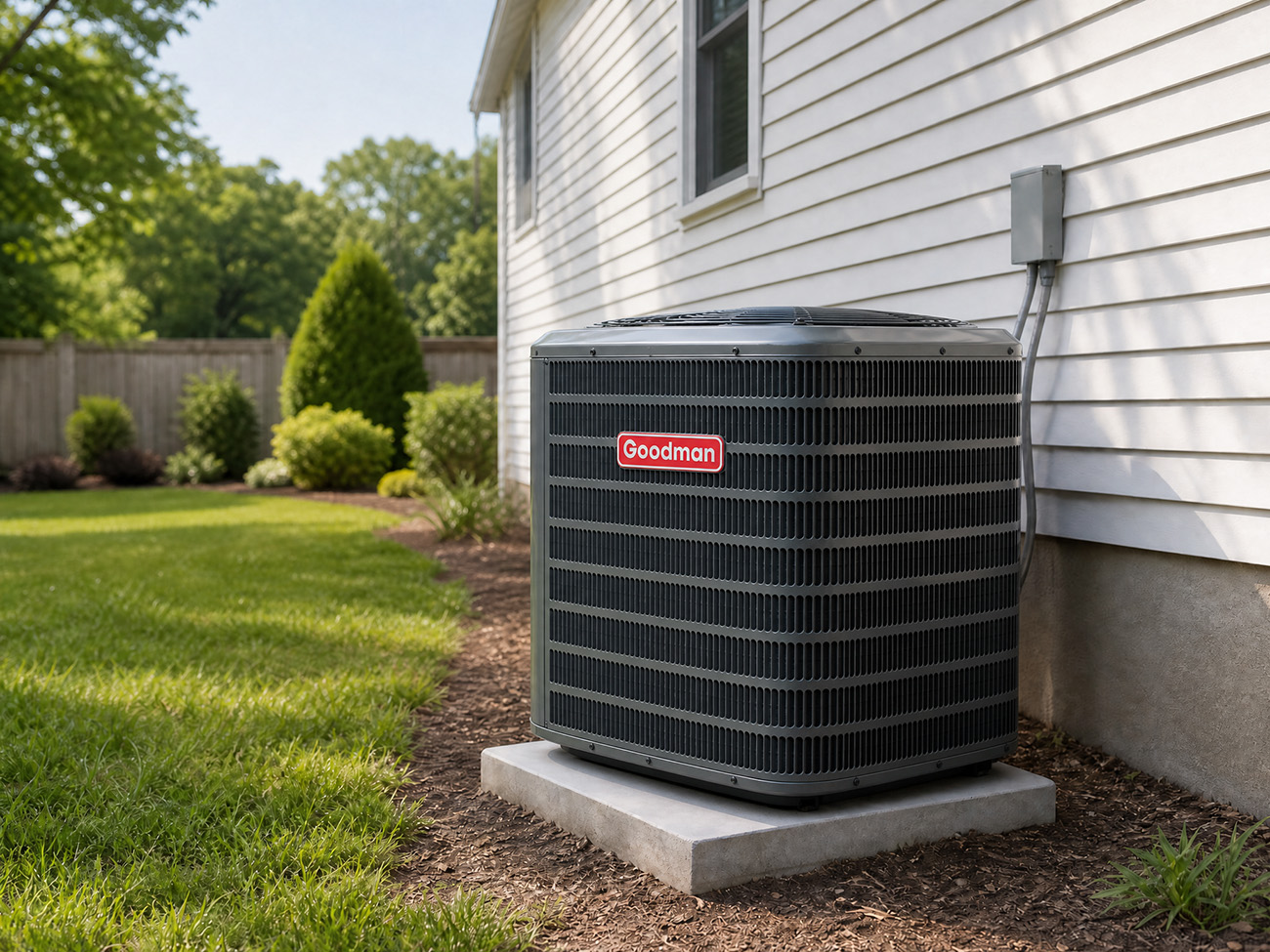
Here’s how central AC equipment generally breaks down across the Greater Toronto Area — not as price tags, but as what each tier gets you:
Budget Tier
Brands like Goodman and Amana. Solid, reliable systems with 14.3–15 SEER2 ratings and a standard single-stage compressor. These units do exactly what they need to do without any bells and whistles. For homeowners watching their budget, they’re genuinely hard to beat. We’ve put in hundreds of Goodman units over the years and they just keep running. As a Goodman Private Label Plus Dealer, we’re able to offer extended labour warranties of 5 or 10 years on select Goodman models at First Choice. That coverage goes well beyond what most companies provide.
Mid-Range Tier
This is where most GTA installations land. Brands like Amana, Daikin, Clean Comfort, and Rheem. Efficiency ratings between 16–18 SEER2. Some models feature two-stage compressors, which means quieter operation and noticeably better humidity control. You feel the difference on those sticky August nights in Mississauga when the humidity is sitting at 80%.
Premium Tier
Lennox XC series, Daikin DX series. Top-tier efficiency (19–24 SEER2), variable-speed compressors that adjust cooling output in real time, and whisper-quiet operation. These units cost more upfront but pay back through energy savings over their lifespan.
Not sure if your current system is worth repairing or replacing? First Choice offers free on-site assessments — we’ll look at your home and give you an accurate, no-obligation quote.
Installation Costs: The Part Nobody Talks About
The unit itself is only half the equation. The other half is the installation — and that depends entirely on how complex the job is. A straightforward swap, pulling out the old condenser and hooking up the new one to existing ductwork, is the simplest scenario. Complications add time, materials, and cost.
If your home doesn’t have existing ductwork, a full duct system turns the job into a much bigger project. Older homes in Oakville’s heritage neighbourhoods run into this constantly. The house was built with radiator heating, nobody ever installed ducts, and suddenly a simple AC replacement turns into a renovation project.
Electrical upgrades are another factor people don’t expect. Your outdoor unit needs a dedicated 240V circuit. If your electrical panel is already maxed out or you’re running on an older 100-amp service, an electrician needs to upgrade it first — and that becomes part of the project.
Permit fees in Ontario vary by municipality. Yes, you need a permit for a central AC installation. The HRAI (Heating, Refrigeration and Air Conditioning Institute of Canada) recommends always working with licensed contractors who pull proper permits. It protects your warranty and your home insurance.
Here’s something we always tell homeowners: ask who actually shows up to do the work. A lot of HVAC companies subcontract installations to third-party crews, which means the person putting in your system has zero long-term relationship with the company you hired. At First Choice, every installation and repair is done by our own technicians. Never subcontracted. That means consistent quality and a team that actually knows your system from day one.
Ontario Rebates That Can Knock Thousands Off Your Bill
The rebate landscape is also shifting quickly. In Ontario, qualifying cold-climate heat pump installations are eligible for government and utility rebates, but the exact amounts change — always check the figures currently published on the official government websites (saveonenergy.ca, Enbridge Gas) before you sign anything. We’ve seen homeowners leave thousands on the table simply because they didn’t ask.
Between provincial and utility rebates, the out-of-pocket cost of a qualifying installation can drop significantly. Always check what’s available before you sign anything. We’ve seen homeowners leave thousands on the table simply because they didn’t ask.
We’re also a Rinnai Authorized Dealer and hold Rinnai Pro certification, which means our customers get an extra 5-year labour warranty on Rinnai products. If you’re considering a tankless water heater or hybrid system alongside your AC, that extended coverage adds real value.
How Long Should a Central AC Last?
A well-maintained central air conditioner in Ontario typically lasts 15–20 years. The key word there is “maintained.” Skip annual tune-ups and that number drops to 10–12 years. We’ve pulled out 8-year-old units that looked like they’d been through a war because the homeowner never changed the filter.
Our climate is brutal on these systems. It’s not just summer heat. The freeze-thaw cycle through March and April can crack condenser coils if you haven’t winterized your outdoor unit. A discussion on Reddit’s r/HVAC community regularly features Canadian homeowners comparing notes on how quickly systems degrade without proper seasonal care.
FAQ
How long does a central AC installation take?
Most straightforward installations wrap up in one day, roughly 4–8 hours. If ductwork modifications or electrical upgrades are needed, plan for two days.
Can I install a central air conditioner myself?
You can buy the unit yourself, sure. But in Ontario, the refrigerant connection and electrical work must be done by a licensed HVAC technician with TSSA certification. DIY installation also voids manufacturer warranties on every brand we carry. Don’t risk it.
What size AC do I need for a 2,000 sq ft home?
Roughly 3 to 3.5 tons, but it really depends on insulation quality, window exposure, ceiling height, and how many floors your home has. A proper Manual J heat load calculation is the only reliable way to size a system. Oversizing causes short-cycling. Undersizing causes constant running. Both cost you money.
Is a higher SEER rating always worth it?
Not always. Jumping from 14.3 to 16 SEER2 trims a meaningful amount off your hydro bill each summer. Going from 20 to 24 SEER2 saves less in comparison, and the equipment premium is steep. For most GTA homes, 16–18 SEER2 hits the sweet spot.
When is the best time to buy a new AC in Ontario?
Late fall or early spring. Demand drops and contractors often run seasonal promotions. Wait until mid-July when your old unit dies on the first 35°C day and you’re paying emergency pricing with limited availability. Every HVAC company in the GTA is slammed during that first heat wave.
Before you start calling contractors, walk outside and check the nameplate on your current unit. It’ll tell you the model, efficiency rating, and manufacture date. If that date reads 2010 or earlier, you already know which conversation is coming next.
With years serving homeowners across Oakville, Mississauga, Burlington, and the GTA, First Choice Heating & Air Conditioning is a TSSA-certified licensed HVAC contractor and offers 24/7 emergency service. Every job is completed by our own in-house technicians. Call us at 905-334-7885 or request a free quote online. One honest note on pricing: no article can tell you what your installation will cost — every home is different. That’s why we offer free on-site assessments. We’ll inspect your home and give you an accurate, line-by-line quote with zero pressure. You can also learn more about our full range of services on our cooling page or check out our furnace installation services if you’re thinking about upgrading your heating system at the same time.
About First Choice Heating & Air Conditioning: First Choice Heating & Air Conditioning provides residential heating and cooling services in Oakville and surrounding GTA communities, including furnace, air conditioning, heat pump, ductwork, water heater, and indoor air quality services.
Why Choose Us
We are leading HVAC company in GTA, specializing in the sales, installation, maintenance, and repairs of all HVAC units.