
Repair or Replace Your Furnace? A Decision Guide From a Tech Who’s Seen Both Sides
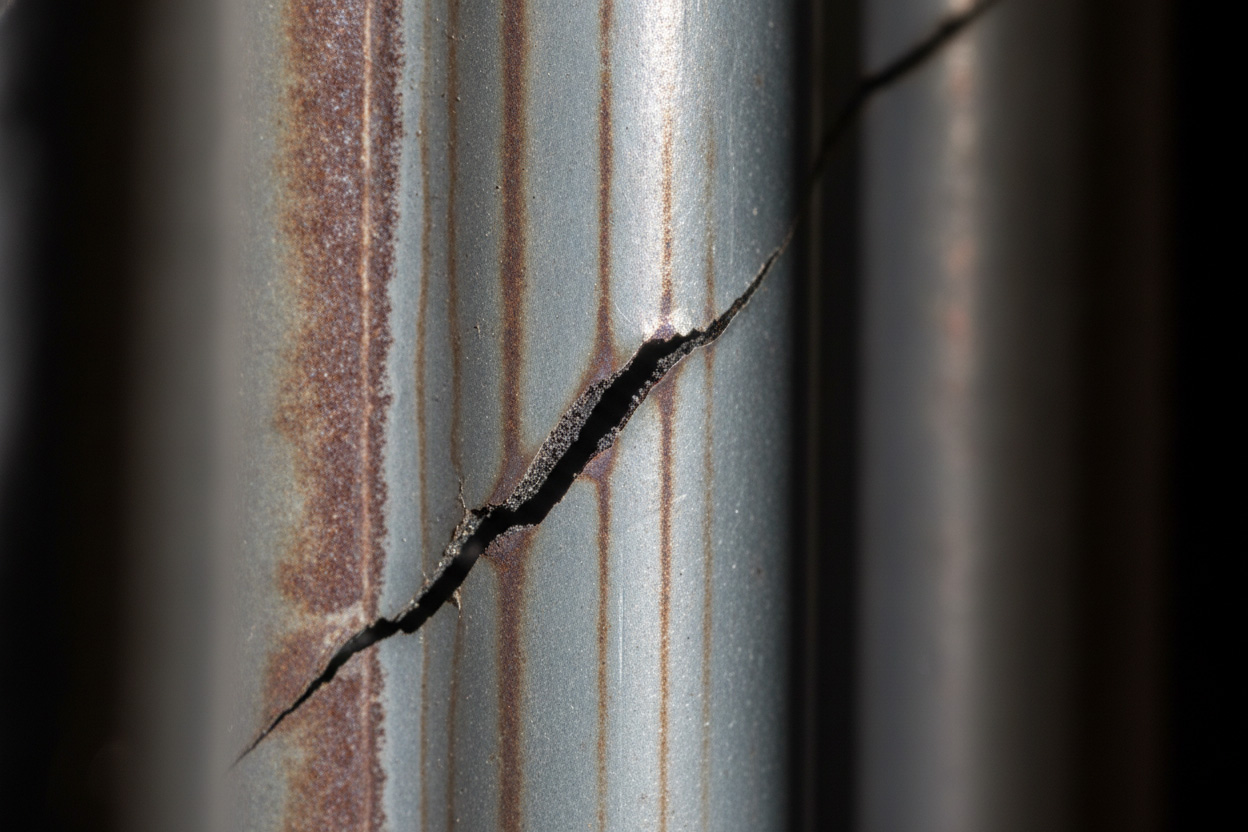
$487 on the invoice. Third repair call this winter. Homeowner hands me the paperwork and says, “Tell me honestly, am I throwing good money after bad?”
This was a house in Mississauga, dead of January. Nineteen-year-old Goodman furnace. First call in November: flame sensor, $180. Second call, January: inducer motor, $420. Now the draft pressure switch was failing. Each repair on its own? Totally reasonable. But you add them up and the homeowner had sunk over a grand into a furnace already past its expected lifespan.
I’m Tony Marchetti. I’ve been doing HVAC in the GTA for over twenty years, TSSA-certified, grew up in Woodbridge. I’ve replaced hundreds of furnaces across Oakville, Mississauga, Burlington, and everywhere in between. I’ve also talked plenty of people out of replacements they didn’t need. This article isn’t about selling you anything. It’s about giving you the same framework I use on the job to figure out whether a furnace deserves another repair or whether it’s time to cut your losses.
The Repair-vs-Replace Calculator: Age Plus Repair Cost
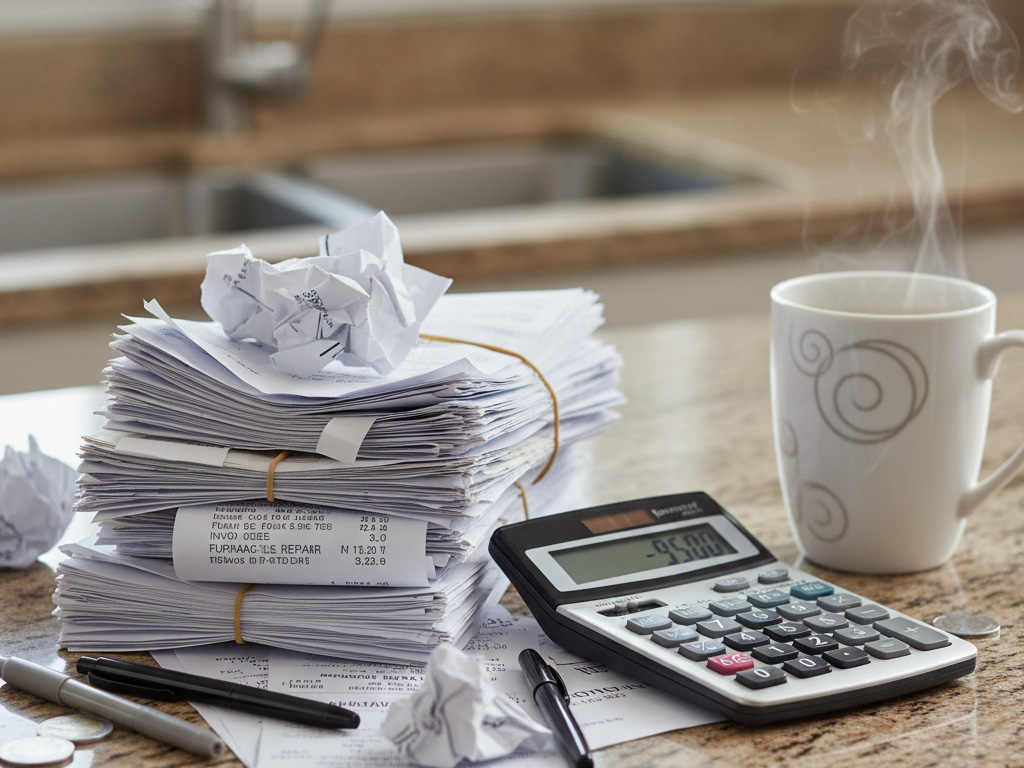
Every time a homeowner asks me this question, I run the same mental calculation. Two numbers: how old is the furnace, and how much is the repair.
Here’s the framework I actually use.
Under 10 years old: Repair almost anything. The unit has significant life left. Even a $1,000 repair on an eight-year-old furnace makes sense. You’re fixing a component, not buying time on a dying system. Most failures in this range are isolated incidents. Flame sensor goes bad, you replace it, furnace runs another five years. Done.
10 to 15 years: Repair the first significant failure. If it’s your second or third repair in two heating seasons, start getting replacement quotes. This is where cascading failures start showing up. One component wears out, the system strains to compensate, and the next weakest link goes. I saw this pattern constantly last winter in Oakville. Homeowners fixing a blower motor in October, then an ignition control in December, then a gas valve in February.
15 to 20 years: Weigh every repair against the replacement cost. Minor stuff like flame sensors, pressure switches, and igniters are still worth doing if it’s the first failure and under $300. Major components like the heat exchanger, control board, or blower motor on a fifteen-year-old unit almost never make financial sense. The next failure is usually close behind.
Over 20 years: Replace it. The furnace has outlived its design life. According to Natural Resources Canada, the average gas furnace lifespan is 15 to 20 years. Running beyond that means burning more gas than the nameplate AFUE rating suggests. And you’re one cold January night in Oakville (when it’s -15°C outside and your family’s relying on that furnace) away from an emergency replacement that costs more and limits your options.
The 50% rule. If a single repair hits more than 50% of what a new furnace would cost, replace it. At current GTA prices, that threshold is roughly $1,750 to $3,000 depending on the replacement model. Straightforward for big failures. Less straightforward for the drip-drip-drip of small repairs that don’t individually trigger the rule but add up to more than a new furnace’s down payment.
Five Signs Your Furnace Is Telling You It’s Done
1. Your Gas Bills Keep Climbing
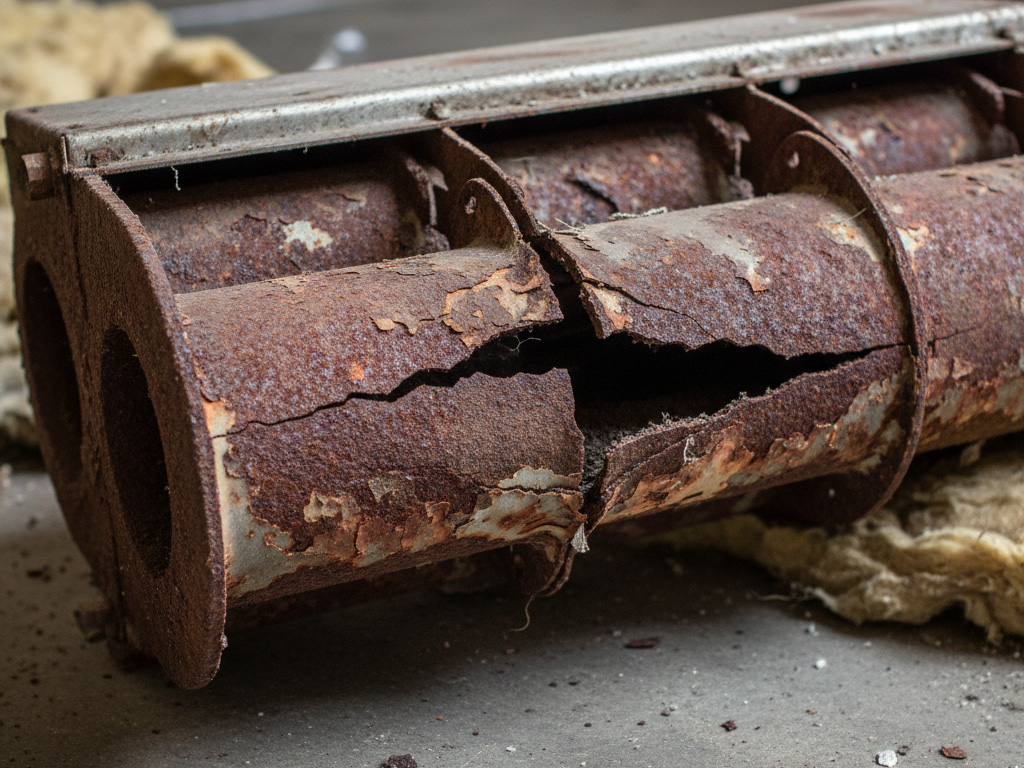
Pull your Enbridge bills from the last three winters. If your gas consumption has jumped 15 to 20% with no change in thermostat settings or household size, the furnace is losing efficiency from the inside out. Worn burners, dirty heat exchangers, failing blower motors. They all reduce the percentage of gas actually converted to usable heat.
A twenty-year-old furnace rated 80% AFUE when it left the factory might be running at 70% or lower by now. That 10% drop is gas going straight up the flue without heating your home. Across a GTA winter, that’s $200 to $400 wasted.
2. Some Rooms Are Cold and Others Aren’t
If the heating has become uneven and it’s getting worse, the furnace may have lost the output capacity to push heated air through the whole duct system. Blower motor degradation drops airflow. Clogged secondary heat exchangers reduce heat transfer. The rooms furthest from the unit feel it first.
Check your ductwork for leaks and make sure vents aren’t blocked. If the ductwork checks out and the problem persists, the equipment itself is likely the issue.
3. The Soundtrack Keeps Changing
A healthy furnace has a predictable sequence: inducer motor starts, igniter clicks, burners light, blower ramps up. You’ve heard it ten thousand times. New sounds mean new problems.
Banging or popping when the burners ignite suggests delayed ignition. Gas builds up before lighting, creating a small explosion inside the combustion chamber. That’s not just annoying. It stresses the heat exchanger. Squealing from the blower area points to a failing bearing. Rattling in the cabinet means loose components vibrating against sheet metal.
Any one of these is repairable on its own. But if the furnace keeps finding new ways to make noise, it’s talking to you. Listen.
4. Yellow or Flickering Burner Flames
Pull the front panel and look at the flames while the furnace is running. They should be steady blue with small yellow tips. Mostly yellow or orange means incomplete combustion. The burners aren’t getting the right air-to-gas mixture.
This isn’t just an efficiency problem. Incomplete combustion produces higher carbon monoxide levels. If you see yellow flames, get a qualified technician out promptly. Could be a simple burner cleaning. Could also reveal a cracked heat exchanger or failing gas valve.
5. Rust or Cracks on the Heat Exchanger
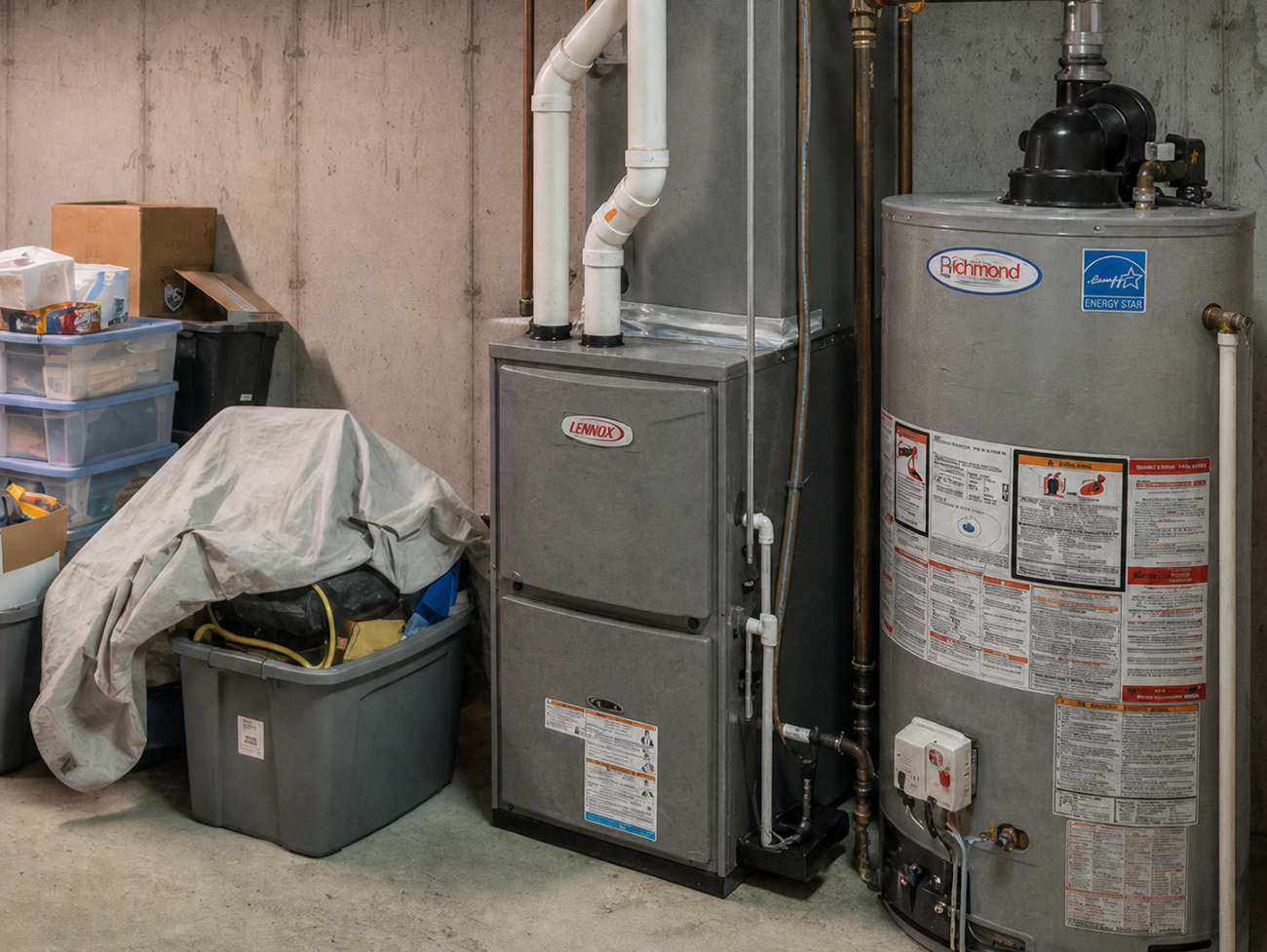
This one’s non-negotiable. A cracked heat exchanger can leak carbon monoxide into your living space. CO is odourless and colourless. No detector, no warning. A failed heat exchanger means the furnace comes out immediately. No discussion.
The TSSA regulates gas equipment safety in Ontario. If there’s any doubt about combustion safety, a TSSA-licensed technician must inspect before the system runs again. The HRAI recommends annual inspections specifically to catch heat exchanger degradation before it becomes a hazard. Some cracks are visible with a flashlight and mirror. Others are hairline fractures that only show under camera inspection.
The Cost Comparison That Actually Matters
People often compare repair cost versus replacement cost in a vacuum. The more useful comparison factors in time.
Repair scenario. You pay $600 for an inducer motor. Furnace runs two more winters. Then the blower motor fails, another $500. Then the control board, $400. Over three years you’ve spent $1,500 on a furnace that still needs replacing.
Replace scenario. You invest $4,500 in a new 96% AFUE furnace with a 10-year parts warranty. Gas bills drop 15 to 20% right away. You might qualify for provincial or utility rebates depending on what you install. Check saveonenergy.ca and Enbridge’s rebate page for current offers. No repair bills for the foreseeable future.
Replacement costs more upfront but less over five years. You get a safer, quieter, more efficient system from day one.
Over on Reddit’s r/HVAC, the consensus from working techs is blunt: stop feeding a furnace that’s calling you twice a year. It’s done.
When Repair Is Genuinely the Right Call
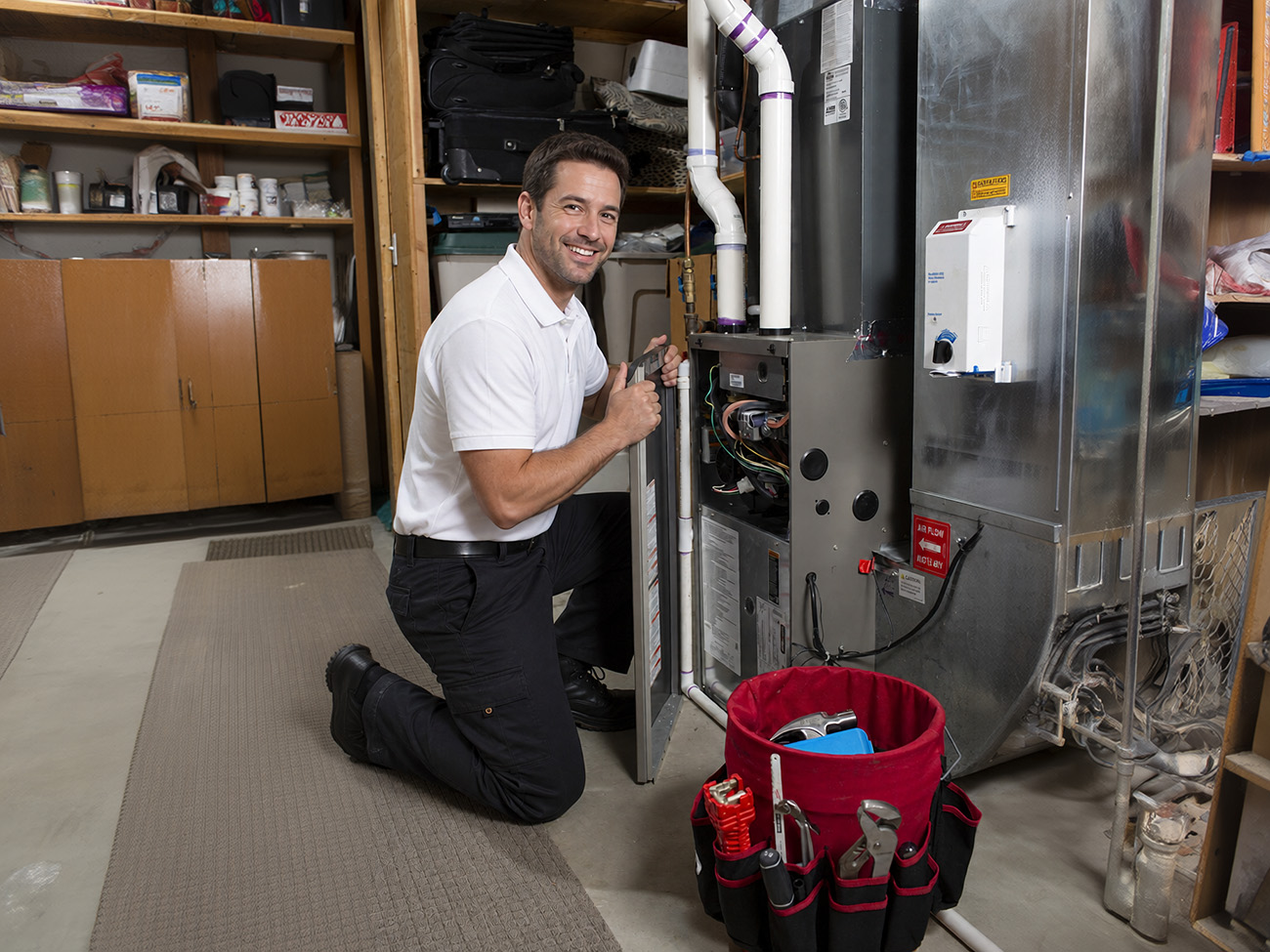
Not every old furnace needs replacing. Here’s where I tell homeowners to hold off.
Minor failure, first one in years. A flame sensor on a twelve-year-old furnace runs $150 to $250 and takes thirty minutes. That’s not a reason to buy a new furnace. Fix it and move on.
Selling within a year. A new furnace adds value, but you won’t recoup the full cost at sale. If the existing system is safe and functional, a repair gets you through to closing. Disclose the age and condition to the buyer.
Still under parts warranty. Most gas furnaces come with a 10-year parts warranty. If the failed part is covered, the component is free and you’re only paying labour. Replacing a furnace that’s still under warranty throws away free parts coverage. We see this all the time at First Choice. A homeowner calls panicking about a $1,200 part, we check the warranty, and the actual bill drops to $300 for labour.
FAQ
How do I know if my heat exchanger is cracked?
You usually can’t without professional inspection. Warning signs include soot around the burner area, a chemical smell when the furnace runs, or your CO detector going off intermittently. Annual inspections by a licensed technician are the most reliable way to catch cracks early. If your CO detector ever sounds an alarm, evacuate the house and call emergency services first. Then deal with the furnace after.
Is it cheaper to repair or replace a 15-year-old furnace?
Depends on what failed. Repairs under $300 on minor components (flame sensor, igniter, pressure switch) are worth doing. Major repairs on a fifteen-year-old unit (heat exchanger, blower motor, control board) rarely pay off. You’re fixing one part while the rest of the system is on borrowed time.
Should I repair my furnace if I’m planning a heat pump upgrade next year?
If the repair is under $500 and keeps the furnace safe, yes. It buys you time to plan the heat pump installation properly and line up rebates. If the repair exceeds $500, redirect that money toward the upgrade. Don’t sink a big repair bill into a furnace you’re about to decommission.
Does homeowner’s insurance cover furnace repairs?
Standard policies don’t cover repairs or replacements from normal wear and tear. If the furnace failure caused secondary damage (a cracked humidifier flooding the basement, for example), the secondary damage might be covered. Check your policy.
Open your furnace maintenance folder if you have one. Add up the last three service invoices. If that number is approaching $1,000 and the furnace is fifteen-plus years old, you already have your answer.
If you want someone to look at it and give you the straight story, no upselling, no pressure, call First Choice Heating & Air Conditioning at 905-334-7885 or request a free quote online. TSSA-certified, backed by 43 five-star Google reviews, serving Oakville, Mississauga, Burlington, and the GTA for over 20 years. As a Goodman Private Label Plus Dealer, we offer 5-year or 10-year labour warranties on select models. We’re also Rinnai Pro certified. Every diagnostic and installation is done by our own technicians, never subcontracted out. We’re available 24/7 for emergencies. We’ll tell you honestly whether your furnace is worth repairing or if it’s time for a replacement, and we’ll show you the full cost breakdown either way.
About the Author: Tony Marchetti is a TSSA-certified HVAC technician with over 20 years of experience installing and servicing residential heating and cooling systems across the Greater Toronto Area. Born and raised in Woodbridge, Tony has completed thousands of furnace, air conditioner, and water heater installations throughout Oakville, Mississauga, Burlington, and surrounding communities. He works with First Choice Heating & Air Conditioning and holds Rinnai Pro and Goodman Private Label Plus dealer certifications.
Why Choose Us
We are leading HVAC company in GTA, specializing in the sales, installation, maintenance, and repairs of all HVAC units.