
SEER, AFUE, and HSPF Explained: How to Read HVAC Efficiency Ratings
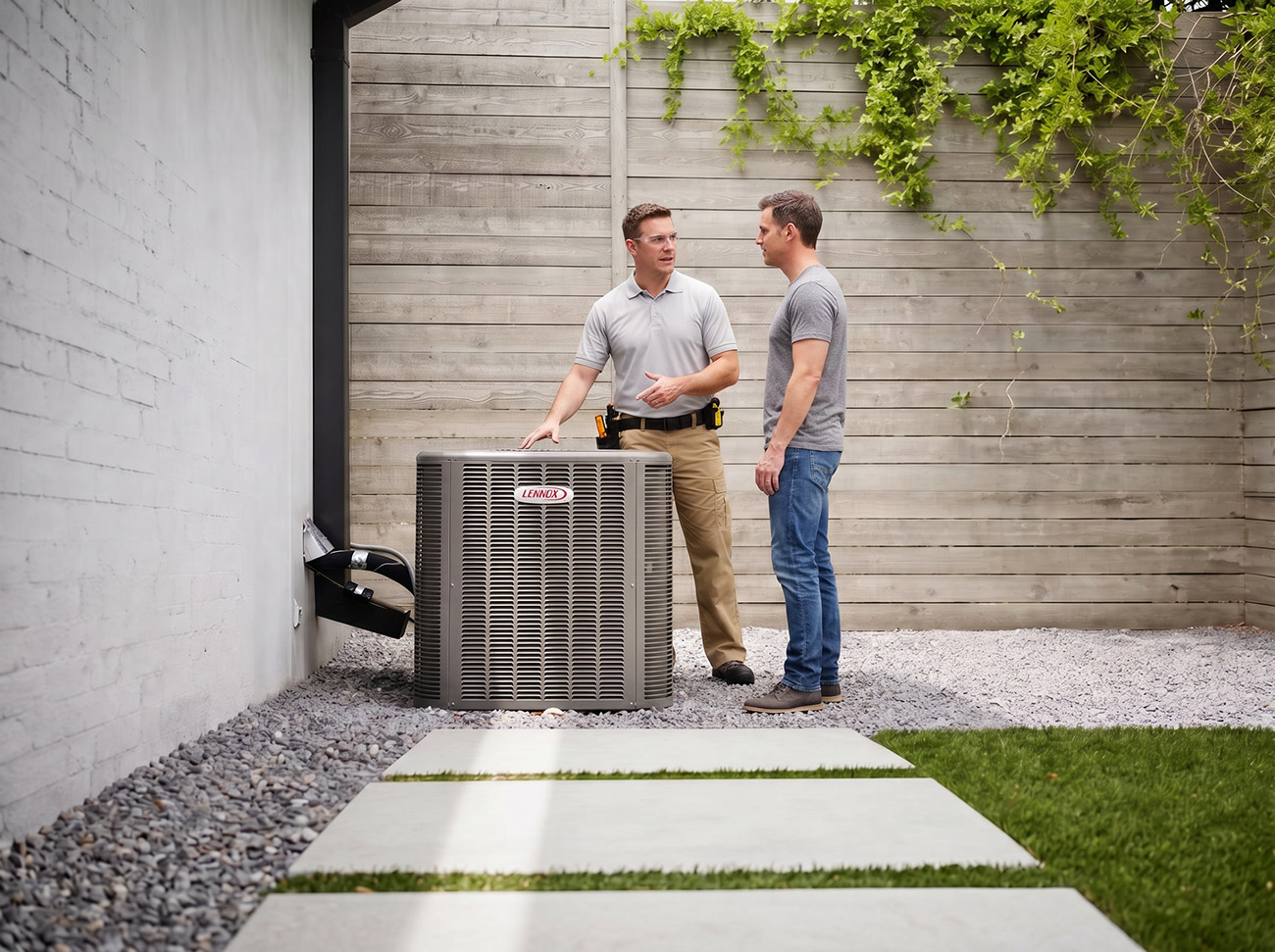
I’m Tony Marchetti. I’ve been working on HVAC systems in the GTA for over twenty years, and I hold my TSSA certification. I grew up in Woodbridge, started apprenticing right out of high school, and I’ve been in people’s basements, attics, and mechanical rooms across Oakville, Mississauga, Burlington, and the rest of the GTA ever since.
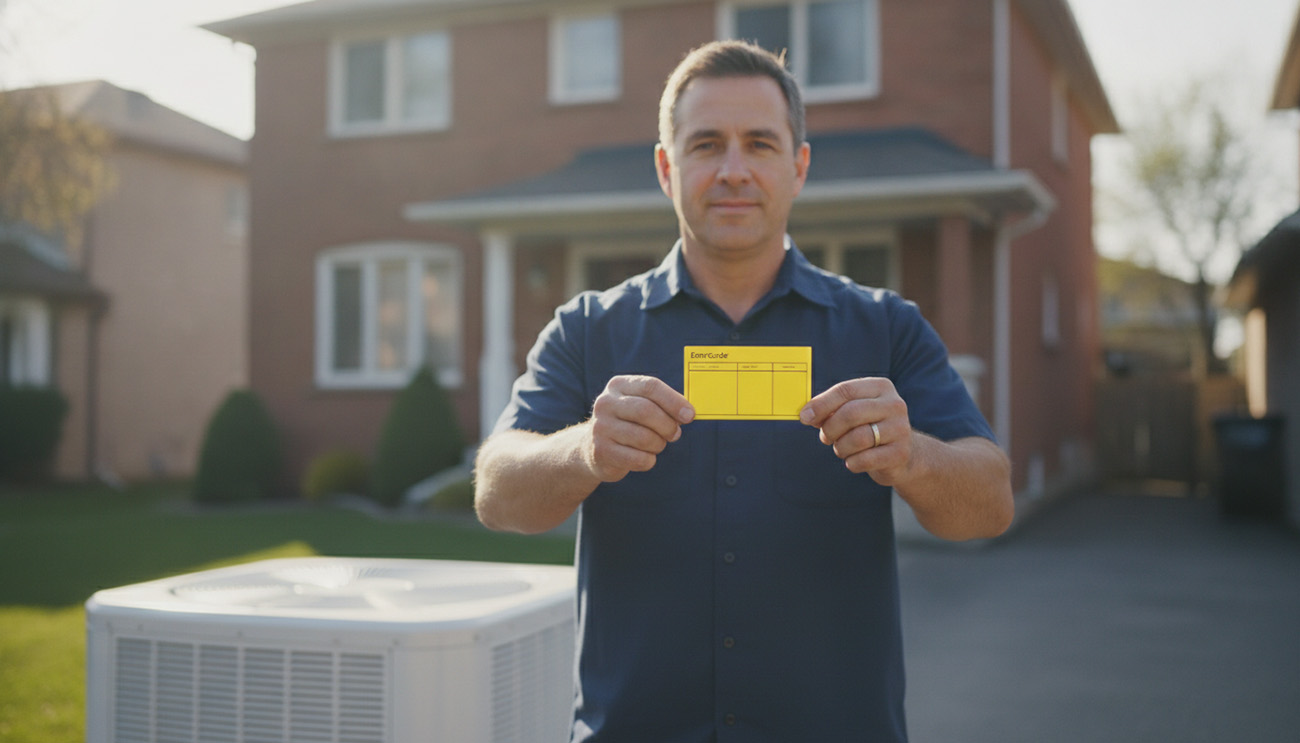
One thing that comes up on almost every service call I do — especially when I’m giving a homeowner a quote for a new furnace, air conditioner, or heat pump — is the efficiency rating. You know, those letters and numbers printed on the yellow EnerGuide sticker. SEER2. AFUE. HSPF2. Most people look at them and their eyes glaze over. And honestly, I don’t blame them. The HVAC industry doesn’t exactly do a great job explaining what any of it means in plain language.
So let me break it down the way I would if you and I were standing in your driveway looking at a new condenser unit.
Think of It Like a Car’s Fuel Economy
Before we get into the alphabet soup, here’s the analogy I always use. When you’re shopping for a car, you check the L/100 km rating, right? A vehicle rated at 6.0 L/100 km burns less fuel than one rated at 10.0 L/100 km. Same idea with HVAC equipment — the efficiency rating tells you how much energy the system uses to do its job. Lower consumption, lower bills. Simple enough.
The catch is that unlike cars, HVAC equipment has different ratings for different types of systems and different functions. A furnace doesn’t get rated the same way as an air conditioner, and a heat pump has two ratings because it heats and cools. That’s where the confusion starts.
AFUE: The Furnace Rating
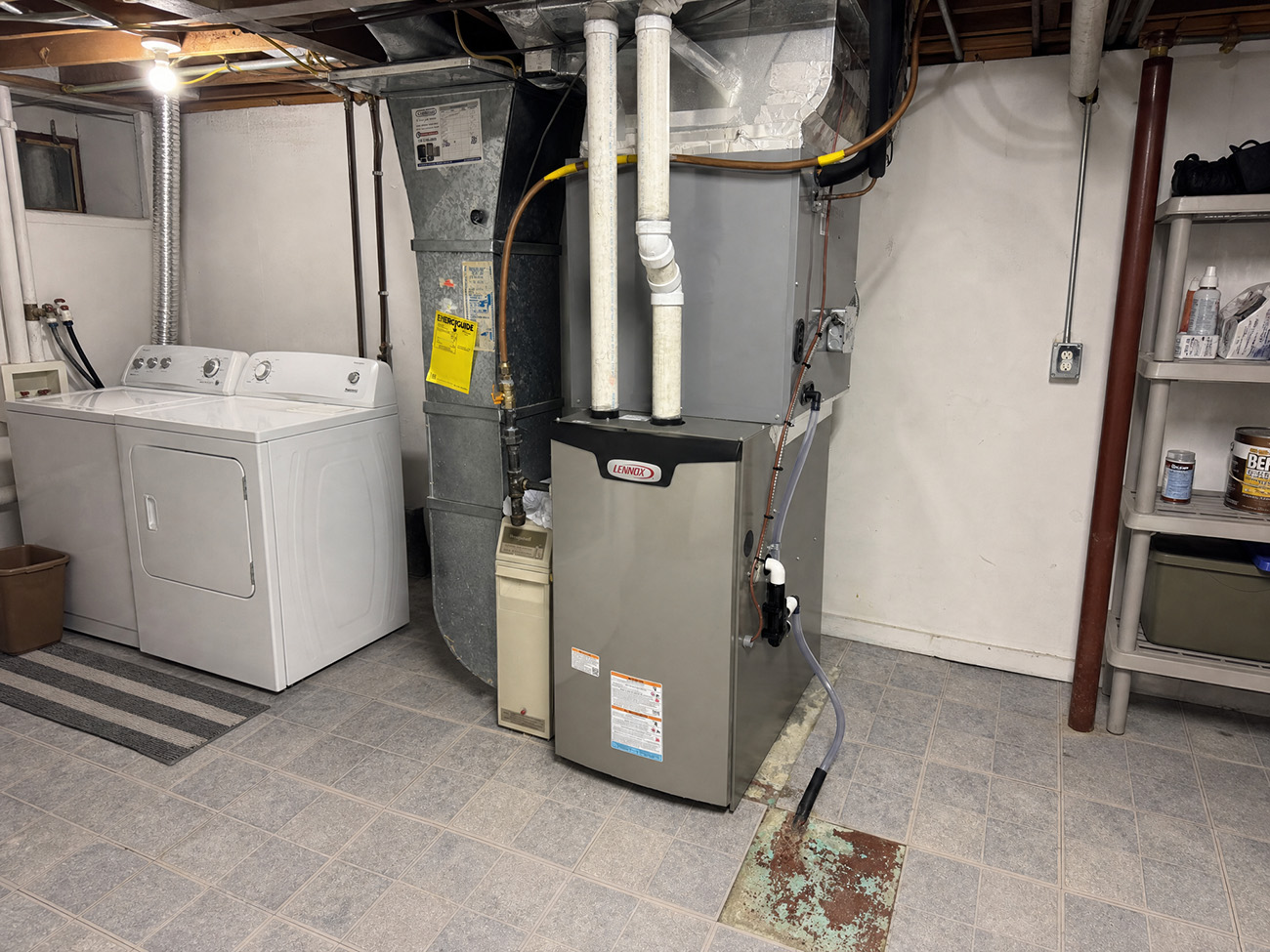
AFUE stands for Annual Fuel Utilization Efficiency. It applies to gas furnaces and gas-fired water heaters. It tells you what percentage of the gas the furnace burns actually turns into usable heat in your home.
Let’s say you’ve got a furnace rated at 96% AFUE. For every dollar you spend on natural gas, 96 cents worth of heat ends up warming your house. The other 4 cents escapes up the flue as exhaust. An older 80% AFUE unit? You’re losing 20 cents of every dollar.
Here’s what that looks like in real dollars. If you spend about $2,000 per winter on natural gas with an 80% AFUE furnace, upgrading to 96% saves you roughly $300 to $400 a year. Over a 15-year lifespan, that’s $4,500 to $6,000 back in your pocket.
But here’s the thing I always tell homeowners: AFUE is measured in a lab. Your furnace doesn’t live in a lab. Leaky ductwork, a dirty filter, or an oversized unit that short-cycles — all of that drags your real efficiency down. The HRAI stresses this constantly: system performance depends on the whole installation, not just the sticker.
Ontario’s current minimum for new gas furnace installations is 95% AFUE. Brands like Goodman, Daikin, Lennox, Amana, and Rheem all offer models from 95% up to 98%. You can look up specific model ratings on the EnerGuide directory. The 96% versus 95% debate? That 1% saves maybe $20 to $40 a year on gas for a $200–$500 equipment premium. Unless that higher-rated unit has features you actually want — like a variable-speed blower motor for quieter, more even heating — I’d put that money elsewhere.
SEER2: The Air Conditioner Rating
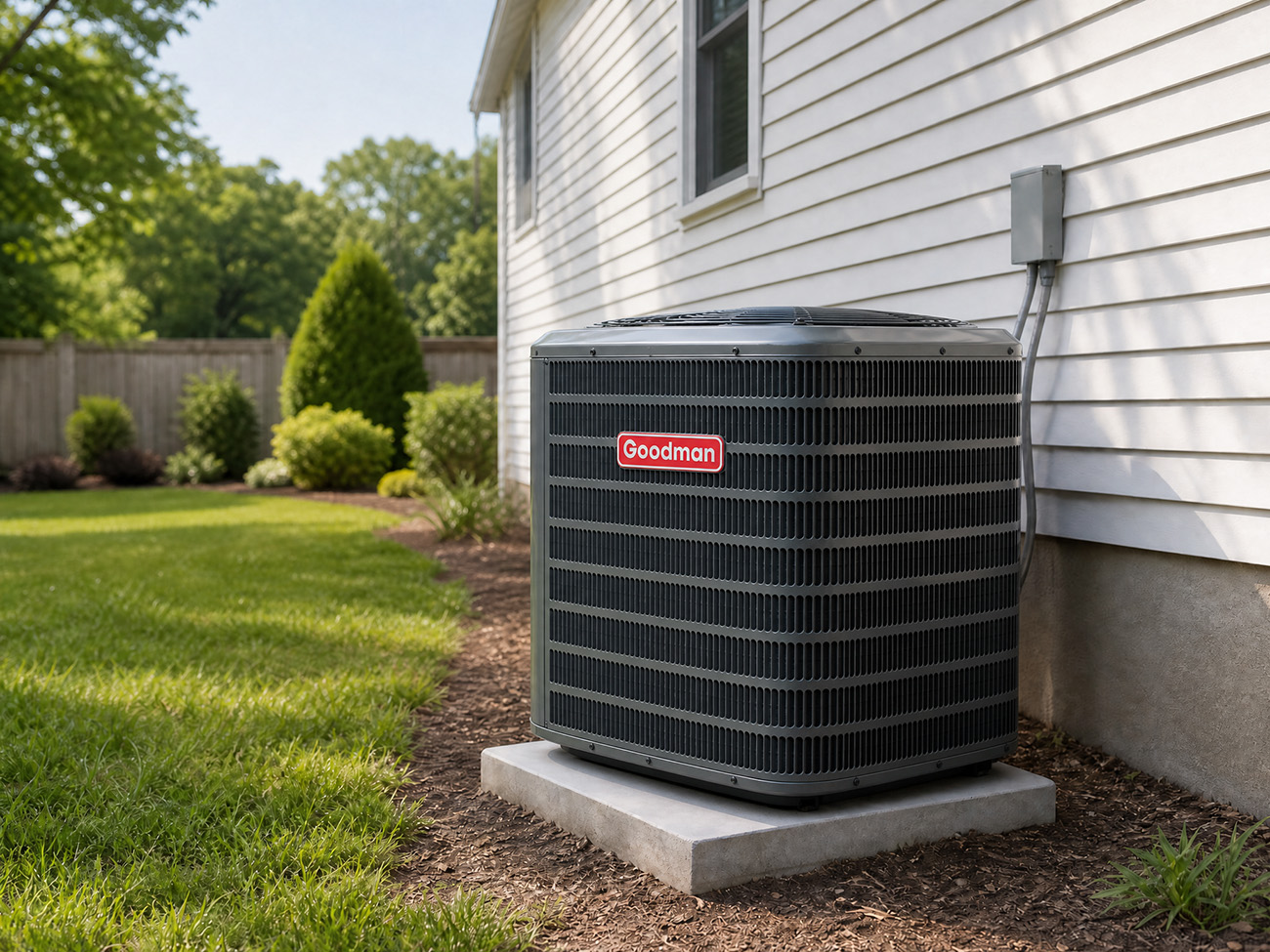
SEER stands for Seasonal Energy Efficiency Ratio. It measures how efficiently an air conditioner or heat pump cools your home over an entire cooling season, not just at one temperature.
In 2023, the industry switched from SEER to SEER2. The new test is a bit tougher, so SEER2 numbers look slightly lower than the old SEER numbers for the same equipment. A unit that used to be rated 16 SEER might show up as 15.2 SEER2. The machine didn’t change — the test did.
What the numbers mean for your hydro bill in a typical 2,500 sq ft GTA home running AC from June through September:
- 14 SEER2 (the minimum you can buy new): roughly $550–$700 per summer
- 16 SEER2: roughly $450–$600
- 18 SEER2: roughly $380–$520
- 22 SEER2: roughly $300–$420
The jump from 14 to 16 SEER2 is where you get the best bang for your buck. Going from 18 to 22 SEER2? The savings shrink, but the equipment price jumps — sometimes $2,000 to $4,000 more. For most homeowners in Oakville and across the GTA, 16 to 18 SEER2 is the sweet spot. Reasonable equipment cost, meaningful energy savings, and these units qualify for NRCan energy efficiency certification, which opens up rebate eligibility.
One thing SEER2 doesn’t tell you: Two units with the same rating can feel completely different. A single-stage compressor runs full blast, shuts off, fires up again — like stop-and-go traffic. A variable-speed compressor adjusts continuously — highway cruising. Better temperature control, lower humidity, quieter operation. Same SEER2 number, different comfort.
HSPF2: The Heat Pump Heating Rating
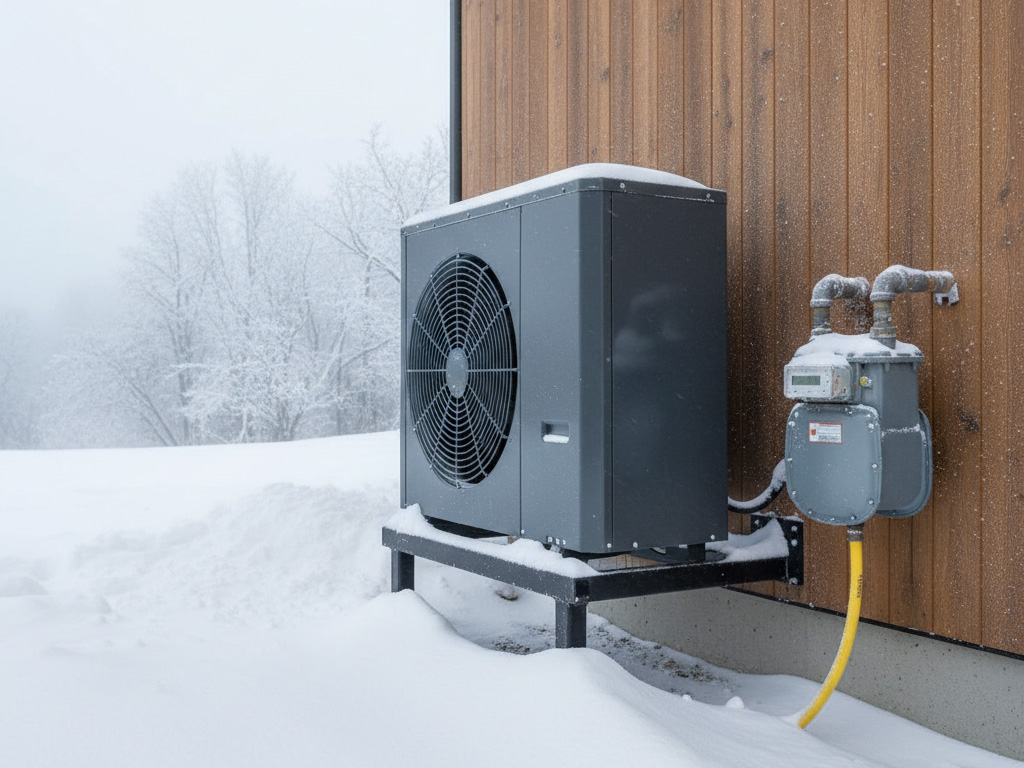
Here’s where it gets interesting. A heat pump has a cooling rating (SEER2, same as an AC) and a separate heating rating called HSPF2 — Heating Seasonal Performance Factor.
HSPF2 measures how efficiently the heat pump heats your home over a full winter. The scale runs from about 6.0 at the low end to 12.0+ for top cold-climate models. Higher numbers mean more heat per kilowatt-hour.
To put that in perspective: An HSPF2 of 8.0 means the heat pump produces 8 BTUs of heat for every watt-hour of electricity consumed. Electric baseboard heating? That’s an effective HSPF of about 3.4. So a heat pump at 8.0 HSPF2 delivers more than double the heat for the same electricity cost.
To qualify for the full range of Canadian rebates, a heat pump needs an HSPF2 of 7.1 or higher with proven performance at -15°C. Some cold-climate models from Daikin and Lennox rate at 10+ HSPF2 — at that level, your winter heating costs can drop to roughly half of what a 96% AFUE gas furnace costs at current Ontario rates.
The Quick Reference: Which Rating Applies to You?
- Buying a furnace? Look at AFUE.
- Buying an AC? Look at SEER2.
- Buying a heat pump? Both — SEER2 for cooling, HSPF2 for heating.
Don’t compare numbers across different rating types. AFUE and SEER2 measure different things — gas versus electricity, heating versus cooling. Like comparing your car’s fuel economy to your bike’s gear ratio.
A Few Rules of Thumb
Don’t chase the highest number. The step up from 14 to 16 SEER2 saves you maybe $100 to $200 per summer. If that higher-rated unit costs $800 more, you break even in 4 to 8 years. If it costs $3,000 more, you’re waiting 15 years — longer than most equipment lasts.
Get your ducts checked before upgrading. You can put the most efficient furnace on the market in a house with leaky ducts and you’re still throwing money away. We see this all the time in older homes across Mississauga and Burlington. Seal the ducts first, then upgrade the equipment.
Maintenance matters more than the rating. A neglected system loses 5 to 10% of its rated efficiency within five years. Dirty coils, low refrigerant, worn blower motors — it all adds up. You paid for that 96% AFUE. Annual maintenance is how you actually get it. The CSA Group standards that govern HVAC equipment in Canada specify proper maintenance schedules for a reason.
FAQ
What’s the difference between SEER and SEER2?
SEER2 uses a stricter test introduced in 2023. Numbers run about 4–5% lower than the old SEER rating for the same equipment. All new equipment sold in Ontario uses SEER2.
What SEER2 rating should I look for?
For most GTA homeowners, 16 to 18 SEER2 is the right range. Anything below 14 SEER2 can’t be sold new. Going above 18 SEER2 only makes financial sense if you run your AC heavily — big house, lots of west-facing windows, working from home all summer — or if rebates are covering the equipment premium.
Is a heat pump worth it in Ontario with our winters?
Modern cold-climate heat pumps handle Ontario winters well. The key is getting a unit rated for it — look for HSPF2 of 7.5 or higher with proven performance down to at least -15°C. The Ontario Energy Board publishes heating fuel cost comparisons that show where a heat pump breaks even against natural gas. Most GTA homeowners keep their gas furnace as backup for the coldest stretches and run the heat pump the rest of the time — a setup that can cut annual heating costs significantly.
Do these ratings change over time?
The rating printed on the sticker stays the same. But actual performance drops as the system ages without maintenance. That’s why I tell every homeowner: get the annual tune-up. The Canada Mortgage and Housing Corporation recommends annual HVAC inspections as part of regular home maintenance.
What about EER — how is that different from SEER?
EER (Energy Efficiency Ratio) measures cooling efficiency at one specific temperature — 35°C. SEER measures the seasonal average across a range. For Ontario, where summer temps swing between 20°C and 35°C+, SEER gives you a better real-world picture.
Next time you’re staring at HVAC quotes, ask one question: what will this actually cost me to run every year? The sticker tells you lab performance. Your energy bills tell you what that’s worth in the real world.
If you want someone to translate those ratings into actual dollars for your home, give us a call. At First Choice Heating & Air Conditioning, we’re a Goodman Private Label Plus Dealer and a Rinnai Pro partner with over 20 years in the business. Our own TSSA-certified technicians — no subcontractors — 24/7 service across Oakville, Mississauga, Burlington, and the GTA. Backed by 43 five-star Google reviews. Call 905-334-7885 or get a free quote online. We’ll walk you through the numbers.
About the Author: Tony Marchetti is a TSSA-certified HVAC technician with over 20 years of experience serving the GTA. Born and raised in Woodbridge, Ontario, Tony has installed and serviced heating and cooling systems in homes across Oakville, Mississauga, Burlington, and the Greater Toronto Area.
Why Choose Us
We are leading HVAC company in GTA, specializing in the sales, installation, maintenance, and repairs of all HVAC units.