
8 Common Reasons Your AC Isn’t Cooling (And What to Check First) | First Choice HVAC
Thirty-one degrees inside. The AC cranking full blast for two days straight.
That’s what I walked into at a home in Burlington last July. The homeowner had the thermostat pinned at 16°C, convinced the whole unit was shot. I popped the panel open, pulled out the filter, and held it up to the hallway light. Couldn’t see a thing through it.
Replaced it, waited fifteen minutes, and the house started cooling down. Total cost: about twelve bucks for a filter from Canadian Tire. I’ve been doing this over twenty years and still run into this exact scenario at least once a week across Oakville, Mississauga, and the rest of the GTA.
My name’s Tony Marchetti. I’m a TSSA-certified HVAC tech with First Choice Heating & Air Conditioning, born and raised in Woodbridge. I’ve worked on everything from builder-grade units to high-efficiency Daikin and Lennox systems. Let me walk you through the eight most common reasons your AC isn’t cooling, what you can check yourself, and what needs a pro.
1. Dirty or Clogged Air Filter
Symptoms: Weak airflow from vents. The system runs forever but never hits your set temperature. Dust builds up faster than normal around return registers.
DIY check: Find your filter. In most GTA homes it’s behind the return grille or inside the furnace cabinet. Pull it out and hold it up to a light. If you can’t see through it, swap it out. Most homes need a new filter every 60 to 90 days. Got pets? Cut that to every 30 days.
Cost to fix: $15 to $40. Two minutes of your time. The Energy Star Canada program recommends checking filters monthly during peak cooling months.
2. Thermostat Settings Got Bumped

Sounds obvious. But I’ve driven across Mississauga for a service call only to find the thermostat set to “Fan” instead of “Cool.” The fan runs, air moves, but the compressor never kicks in. No cold air. No refrigerant cycling.
DIY check: Make sure it’s set to “Cool,” not “Heat” or “Fan Only.” Drop the target at least 3 to 4°C below room temperature. If your thermostat uses batteries, check those too. A dying battery can cause the display to flicker or lose its programming.
Cost to fix: Free.
3. Blocked or Closed Supply Vents
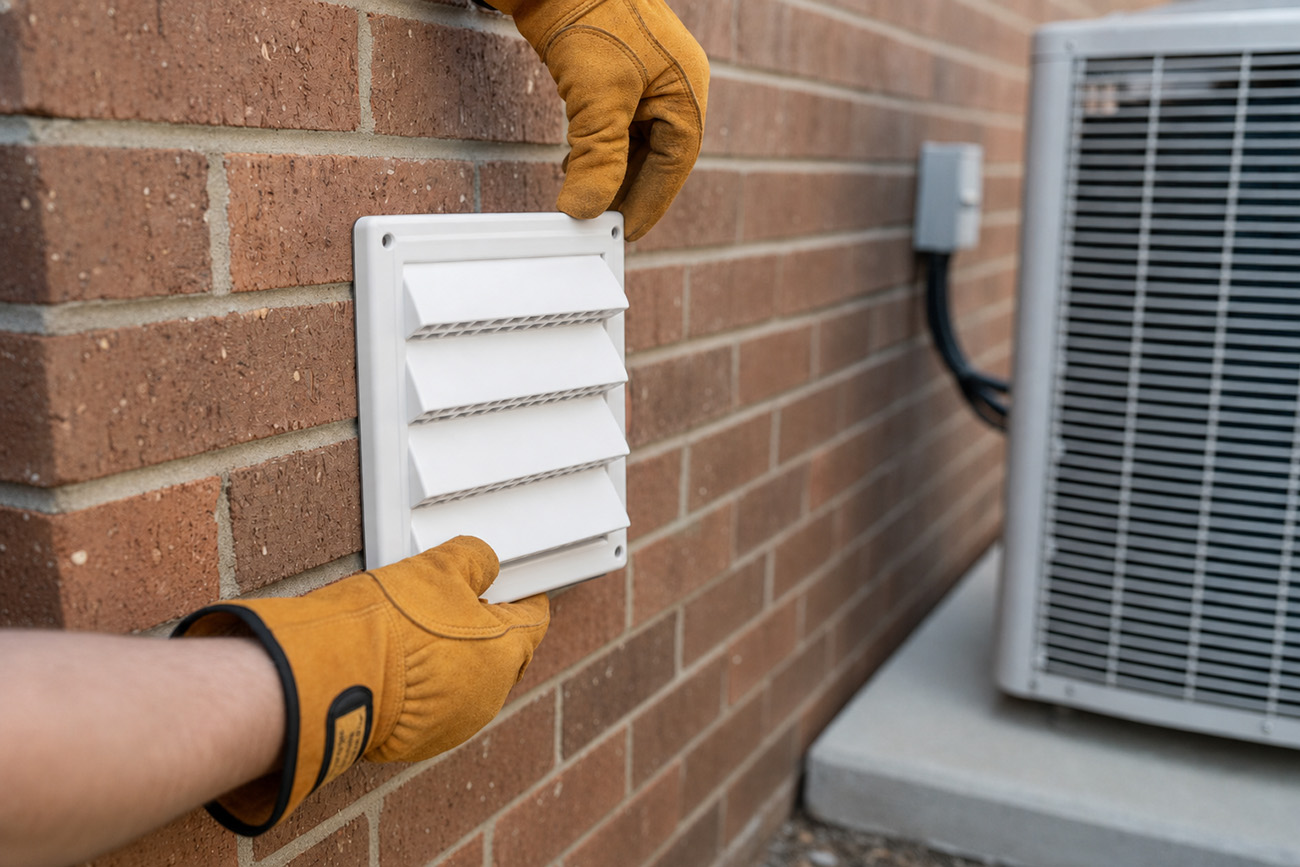
People close vents in spare bedrooms thinking they’ll save energy. Bad idea. Your AC is sized for a specific amount of airflow. Close off too many vents and static pressure spikes through your ducts. The system struggles, cools unevenly, and can even freeze the evaporator coil.
DIY check: Walk through every room and make sure every supply register is open. Check that furniture or storage boxes aren’t blocking the return air grilles. Those returns need clear space to pull warm air back into the system.
Cost to fix: Nothing.
4. Dirty Condenser Coils
Symptoms: The outdoor unit runs constantly but the house won’t cool. Compressor sounds louder than usual.
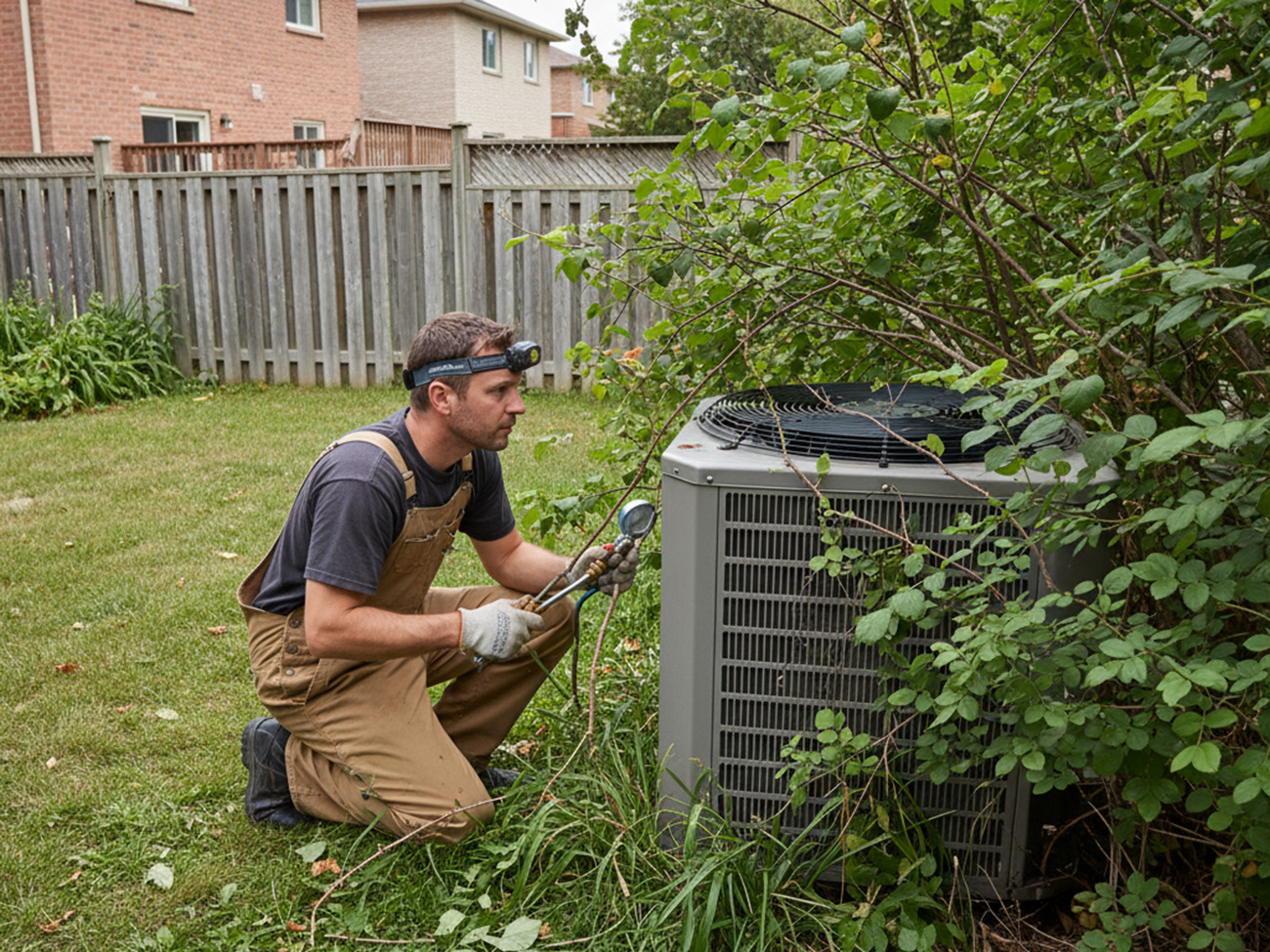
DIY check: Look at your condenser unit. Can you see clean metal fins, or is everything buried under grass and dirt? If it’s clogged, shut off the disconnect switch and gently hose it down. Don’t pressure wash it. Those aluminium fins bend like wet paper. I see this damage constantly on Goodman and Amana units parked right beside a garden bed.
Cost to fix: Free to hose off yourself. Professional coil cleaning runs $150 to $300 for severe buildup.
5. Low Refrigerant
Symptoms: Lukewarm air from vents. Hissing sounds near the indoor unit. Ice forming on the copper refrigerant lines outside.
Here’s what most people don’t understand about refrigerant. It’s not fuel. It doesn’t get “used up.” Your AC runs on a sealed loop. If it’s low, there’s a leak. Topping it up without fixing the leak is like filling a bucket with a hole in it.
DIY check: Look for frost or ice on the copper lineset between your indoor and outdoor units. Ice in July is a red flag. Beyond that, diagnosing a leak requires gauges and training.
Cost to fix: Leak detection and recharge runs $300 to $800. If your system uses old R-22, add a few hundred more. R-22 has been phased out in Canada and gets pricier every year. Modern systems from Rheem and Clean Comfort use R-410A. Natural Resources Canada has good info on the refrigerant phase-out timeline.
6. Frozen Evaporator Coil
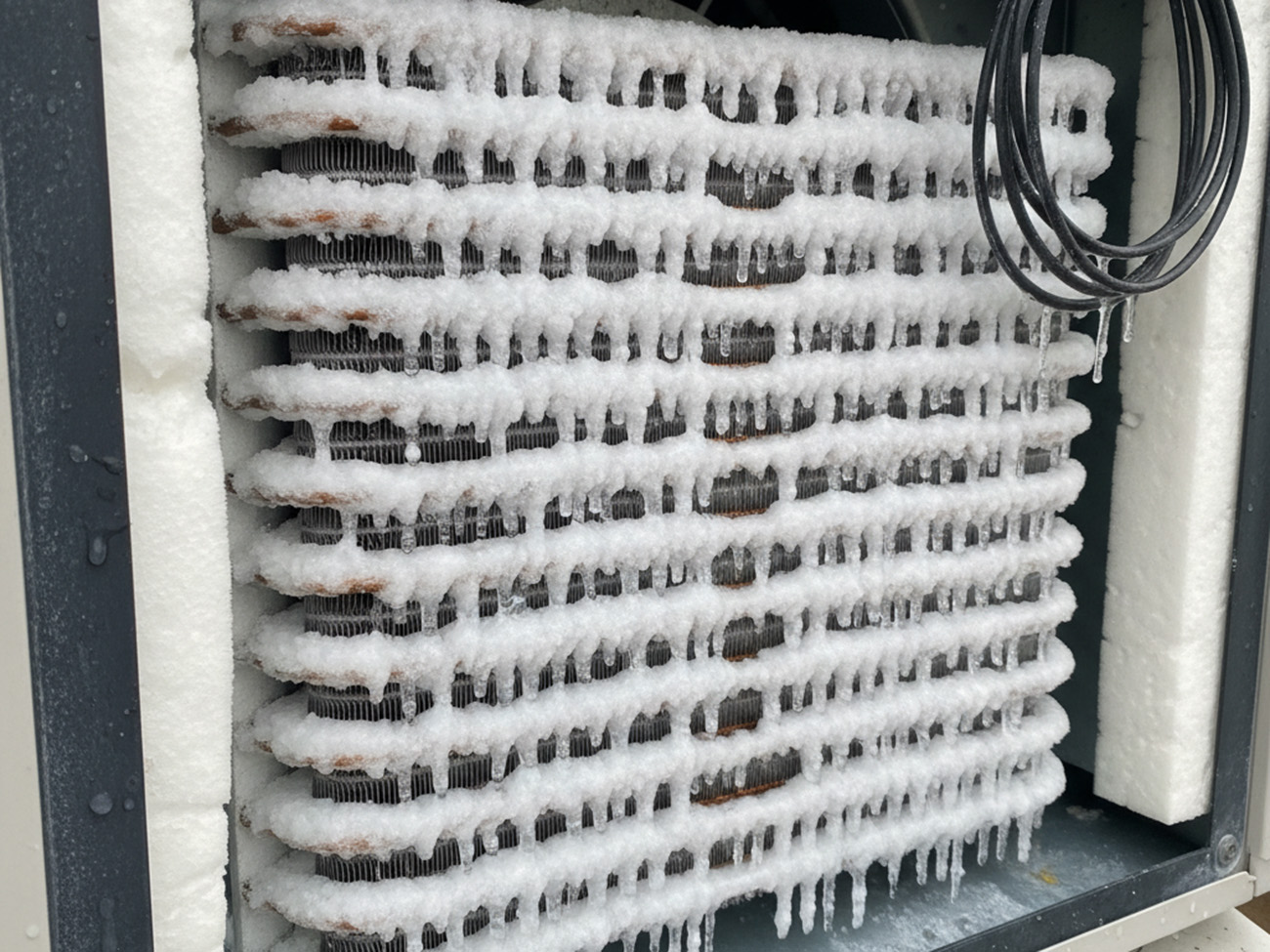
This usually goes hand in hand with low refrigerant or restricted airflow. When the evaporator coil inside your furnace gets too cold, moisture freezes directly onto it. Once it’s iced over, air can’t pass through. Your system chokes on itself.
DIY check: Remove the furnace access panel and look for frost or solid ice. If you see it, shut the AC off immediately. Switch the fan to “On” to speed up the thaw. Put towels down. The ice is a symptom, not the cause. Until you fix the underlying issue, it’ll freeze again.
Cost to fix: The thaw is free. Fixing the cause ranges from $20 (new filter) to $600-plus (refrigerant repair or blower motor).
7. Faulty Capacitor or Contactor
Symptoms: The outdoor unit clicks and hums but never starts, or starts then shuts off quickly. Burning smell near the condenser. Indoor fan runs fine but air is warm because the compressor never kicked on.
The capacitor gives your compressor and fan motors the electrical jolt they need to start. Contactors are the magnetic switches controlling power to the outdoor unit. Capacitors degrade over time. Contactors get pitted from electrical arcing. Neither part is expensive on its own, but a failed capacitor can destroy your compressor if you keep forcing the system to run.
DIY check: A bulging or leaking capacitor is easy to spot. Testing requires a multimeter and some comfort around live electrical components. I’d leave this one to a licensed tech.
Cost to fix: $150 to $350 for the service call and replacement.
8. Ductwork Leaks or Blockages
Symptoms: Uneven cooling between rooms. Weak airflow from specific vents. Dusty smell when the AC kicks on. Bills climbing despite normal usage.
Your ductwork is the delivery system. If it has gaps, disconnected joints, or crushed sections, you could be dumping 20 to 30% of your cooled air into the attic or wall cavities. I find this constantly in older GTA homes where the original ducts were never sealed properly.
DIY check: If you have an unfinished basement, feel along exposed duct seams while the system runs. Air escaping at joints means you’ve got a problem. For hidden sections, you’d need a professional leakage test. The TSSA website has info on contractor licensing in Ontario.
Cost to fix: DIY duct sealing with mastic or foil tape runs $20 to $50. Professional sealing runs $500 to $2,000 depending on accessibility.
When to Stop DIY and Call a Pro
You’ve changed the filter. Thermostat is set right. Vents are open. Outdoor unit is clean. And the house is still thirty degrees.
Time to bring in someone with proper tools and training. Refrigerant handling requires a TSSA licence in Ontario. Electrical diagnostics on a $5,000 compressor isn’t something you want to learn on YouTube.
At First Choice Heating & Air Conditioning, every service call is handled by our own technicians. No subcontractors, no random guys in unmarked vans. We’re a Goodman Private Label Plus Dealer and a Rinnai Pro certified installer. Over twenty years in the business, TSSA-certified, backed by 43 Google reviews across the GTA. We offer 24/7 emergency service because heat waves don’t wait for business hours.
Call 905-334-7885 or request a quote online.
Frequently Asked Questions
How do I know if my AC needs refrigerant or a whole new unit?
If your system is under ten years old and reliable, a leak repair is usually worth it. If it’s pushing fifteen years, needs constant repairs, or still runs on old R-22, replacement almost always makes more sense. A decent technician will give you honest numbers, not just push for the bigger sale.
Why does my AC freeze up in the middle of summer?
Nine times out of ten, restricted airflow or low refrigerant. Check your filter first. If it’s clean and the coil still freezes, you’re likely looking at a refrigerant leak or a blower motor that’s losing airflow. Either way, it needs professional attention before compressor damage sets in.
Can I run my AC if it’s blowing warm air?
You shouldn’t. Running a struggling system is the fastest way to turn a small problem into a massive one. That compressor is the single most expensive component. If the AC isn’t cooling, shut it off and get someone out to look at it.
How often should an AC get serviced in Ontario?
Once a year, ideally in late April or early May. A tune-up covers coil cleaning, refrigerant checks, electrical inspections, and performance testing. The Heating, Refrigeration and Air Conditioning Institute of Canada (HRAI) recommends annual maintenance.
What’s the average lifespan of a central AC in the GTA?
Fifteen to twenty years with proper maintenance. Freezing winters and humid summers put your condenser through a lot. If your system is fifteen-plus years old and repair quotes are stacking up, think about replacement before a heat wave forces your hand. The r/HVAC community on Reddit has honest repair-versus-replace discussions worth browsing.
Not every cooling problem needs a truck roll. Check your filter, verify the thermostat, open those vents. You’d be amazed how many service calls are solved in ten minutes with a twenty-dollar part.
When the easy checks don’t pan out, don’t let it slide. A small refrigerant leak today becomes a dead compressor next month. Call a licensed technician and make sure the person showing up actually works for the company you called, not some third-party contractor handed a work order that morning.
If you’re in Oakville, Mississauga, Burlington, or anywhere across the GTA and your AC isn’t keeping up, give us a call. We’ll figure out what’s going on and tell you what it costs to fix. No games, no hidden fees, no subcontractors.
905-334-7885 or book online.
About the Author: Tony Marchetti is a TSSA-certified HVAC technician with over 20 years of experience. Born and raised in Woodbridge, he’s serviced thousands of residential systems across the GTA. He writes for First Choice Heating & Air Conditioning, drawing on real service calls to help homeowners make informed decisions.
Why Choose Us
We are leading HVAC company in GTA, specializing in the sales, installation, maintenance, and repairs of all HVAC units.