
What Is the Most Energy Efficient Heating System? An Ontario Tech’s Honest Answer
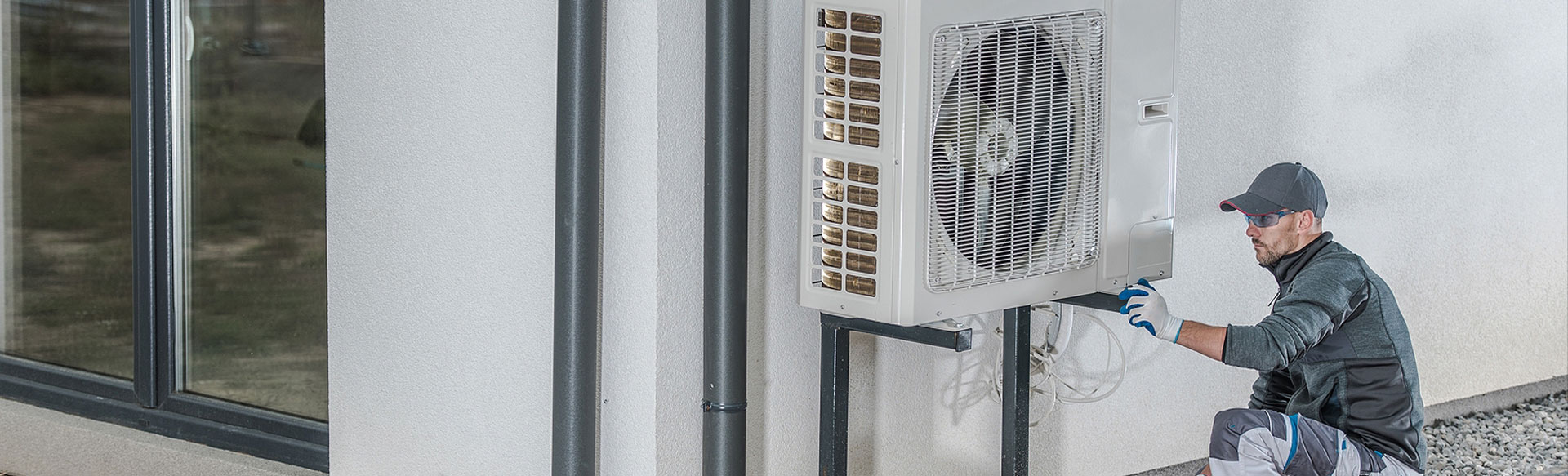
Last February, a homeowner in Mississauga had three quotes spread across his kitchen table: a basic 96% AFUE furnace swap in the low five figures, a cold-climate heat pump at roughly twice that, and a ground-source system several times higher still.
“Just tell me which one is the most efficient,” he said. “I’ll pay for the best one.”
It is a fair question, and the honest answer is more useful than he expected. Efficiency on paper and efficiency on your Enbridge bill are two different things. Let me walk you through all three options the way I would if you called us for a quote.
The Short Answer
For most Ontario homes, a cold-climate air-source heat pump is the most energy-efficient heating system you can buy. It moves 2 to 4 units of heat into your home for every unit of electricity it uses, and modern units keep working down to -25°C.
A ground-source (geothermal) heat pump is technically more efficient still, with year-round efficiency ratings nothing else touches. But it costs $25,000 to $40,000 or more to install, which puts it out of reach for most homeowners.
A high-efficiency gas furnace at 97 to 98% AFUE is the cheapest to install and still the right call for some homes, especially as part of a hybrid setup.
Now the details, because the details are where the money is.
How Each System Actually Heats Your Home
Cold-climate air-source heat pump. It does not create heat. It moves it. Even at -10°C, outdoor air holds heat energy, and the heat pump’s refrigerant cycle extracts it and delivers it indoors. In mild weather (5°C to 10°C), a good unit runs at a COP of 3.0 to 4.0 — three to four units of heat per unit of electricity. At -15°C, that drops to around 2.0. At -25°C, most cold-climate models still run, often with backup heat kicking in for the coldest stretches. Daikin’s cold-climate models, which we install regularly, are rated to heat down to -25°C.
Ground-source heat pump. Same idea, but it pulls heat from the ground instead of the air. A few metres down, the earth sits at a steady 8 to 12°C all winter. That stable source means a COP of 3.0 to 5.0 all season long, regardless of what the thermometer says. The catch is the ground loop: you need horizontal trenches across a large yard or a vertical borehole drilled 100 to 150 metres deep. That is where the $25,000 to $40,000+ price tag comes from.
High-efficiency gas furnace. It burns natural gas in a sealed combustion chamber. A 97 to 98% AFUE unit turns 97 to 98 cents of every gas dollar into usable heat. That is about as good as combustion gets. Lennox makes 98% AFUE models, and Daikin, Goodman, and Amana all offer 96 to 97% units with solid 10-year parts warranties.
The Three-Way Comparison
| Cold-Climate Heat Pump | Ground-Source Heat Pump | 97-98% AFUE Gas Furnace | |
|---|---|---|---|
| Installed cost | $8,000–$14,000 | $25,000–$40,000+ | $3,500–$6,000 |
| Efficiency rating | COP 2.0–4.0 (HSPF2 8.5–10) | COP 3.0–5.0 year-round | 97–98% AFUE |
| Annual heating cost (2,000 sq ft GTA home) | $900–$1,600 (electricity) | $700–$1,200 (electricity) | $1,400–$2,200 (gas + blower) |
| Works at -25°C | Yes, with reduced output | Yes, full output | Yes |
| Also cools in summer | Yes | Yes | No (needs separate AC) |
| Best for | Most Ontario homes with ducts or open layouts | Large lots, new builds, long-term owners | Homes with cheap gas access, budget installs, hybrid setups |
| Lifespan | 15–20 years | 20–25 years (loops last 50+) | 15–20 years |
The Ontario Math: Gas vs. Electricity
This is the part most online articles skip, and it matters more than any efficiency rating.
Enbridge natural gas in the GTA runs roughly $0.25 to $0.35 per cubic metre once you include delivery charges. One cubic metre holds about 10.3 kWh of heat energy. At 97% AFUE, that gives you roughly 10 kWh of useful heat — so gas heat costs you about 3 cents per kWh of heat.
Ontario electricity under the Ultra-Low Overnight plan runs roughly 9 cents per kWh overnight, 12 cents mid-peak, and up to 28 cents on-peak. Most heating happens during the day, so figure 12 to 17 cents per kWh as a realistic blended rate for winter heating.
Now do the heat pump math. At a COP of 3.0 and 13 cents per kWh, your heat costs about 4.3 cents per kWh — slightly more than gas. At a COP of 3.5 in milder weather, it drops to 3.7 cents — basically tied with gas. At a COP of 2.0 in deep cold on a 17-cent rate, it climbs to 8.5 cents — clearly more expensive than gas.
That is exactly why I tell homeowners the truth: a heat pump is the most efficient system, but “most efficient” does not automatically mean “cheapest to run every hour of winter.” In October, November, March, and April — most of the heating season — the heat pump wins comfortably. In a -25°C cold snap, gas is cheaper per unit of heat.
Over a full Ontario winter, a cold-climate heat pump still comes out ahead on operating cost for most homes, typically saving $300 to $800 a year versus a mid-efficiency furnace. Against a 97% furnace, the savings are smaller — $100 to $400 a year — which is why the payback math needs the rebate picture too.
Why Hybrid Systems Make So Much Sense in the GTA
A hybrid (dual-fuel) system pairs a cold-climate heat pump with a high-efficiency gas furnace. The heat pump handles everything down to about -12°C to -15°C, where it is efficient and cheap to run. Below that, the gas furnace takes over for the coldest weeks.
You get the heat pump’s efficiency for roughly 80% of the heating season and the furnace’s cheap, powerful heat for the brutal 20%. Installed cost runs $10,000 to $16,000 — more than a furnace alone, less than a full heat pump conversion in some cases, and you already have backup heat if anything ever fails.
For a lot of GTA homes with existing gas service and ductwork, this is the setup I recommend most. It is practical, it is resilient, and the math works.
Rebates Change the Payback Math
Ontario’s Save on Energy Home Renovation Savings program offers rebates worth up to $7,500 for qualifying cold-climate heat pump installations. Federal programs have offered additional support for heat pump conversions, with amounts that change year to year.
A $12,000 heat pump minus a $7,500 rebate is a $4,500 net cost — barely more than a basic furnace swap. At that point the operating savings pay back the difference in two to four years, and everything after that is money back in your pocket.
Two warnings from someone who has watched homeowners leave money on the table. First, rebate amounts and eligibility change — confirm the current numbers before you sign anything. Second, most rebates require the installation to be done by a qualified contractor with proper permits. A cash deal with no paperwork can disqualify you from thousands of dollars.
The Part Nobody Puts in the Brochure
Here is what years in this trade have taught me: the nameplate efficiency rating is maybe half the story.
I have seen 98% AFUE furnaces running at effectively 80% because the ductwork leaked like a sieve and the system was oversized by a full ton. I have seen heat pumps underperform because nobody did a Manual J load calculation and the unit short-cycled itself to an early grave. And I have seen a basic 92% furnace in a well-insulated, well-sealed house cost less to run than a premium system in a drafty one.
Before you spend a dollar on equipment, know this:
- A Manual J heat load calculation ($200 to $500, often free with a quote) is the only honest way to size any system. Anyone who quotes tonnage after a five-minute walkthrough is guessing.
- Ductwork condition can waste 20 to 30% of your heated air before it reaches a single room, according to Natural Resources Canada. Sealing and insulating ducts sometimes beats upgrading equipment.
- Insulation and air sealing — attic insulation, window upgrades, draft-proofing — cut your heating load no matter what system you buy. Every dollar there multiplies the value of the equipment.
The most energy-efficient heating system in the world cannot overcome a house that leaks heat like a tent.
FAQ
If heat pumps are the most efficient, why does anyone still buy a gas furnace?
Upfront cost, mostly. A furnace costs $3,500 to $6,000 installed versus $8,000 to $14,000 for a heat pump. Homes with existing gas lines and ductwork can swap a furnace in a day. And during the coldest snaps, gas heat is cheaper per unit of energy. For budget-conscious homeowners or rental properties, a 97% furnace is still a defensible choice.
Will a heat pump really keep my house warm at -25°C?
A true cold-climate model will, though its output drops as it gets colder. Most systems are designed with backup heat — electric resistance or a gas furnace in a hybrid setup — for the coldest hours. What a heat pump will not do is leave you freezing; it just gets more expensive to run at the extremes, which is when the backup takes over.
Is geothermal worth it in Ontario?
If you have the land, plan to stay in the home for 15+ years, and can stomach the $25,000 to $40,000+ install cost, the operating costs are the lowest of any system and the ground loop lasts 50 years or more. For most existing GTA homes on standard lots, the drilling logistics and cost make it impractical. It shines brightest in new builds and rural properties.
How long until a heat pump pays for itself?
Against an aging 80% furnace, with current rebates, typically 3 to 6 years. Against a new 97% furnace with no rebates, it can stretch to 8 to 12 years on energy savings alone. The rebate picture is what usually tips it — always factor in Save on Energy and any federal programs before doing the math.
Does a heat pump replace my air conditioner too?
Yes. A heat pump is an air conditioner that can run in reverse. If your AC is aging, a heat pump conversion covers both heating and cooling in one installation, which improves the value equation considerably.
What size heat pump does my home need?
Same answer as air conditioning: it depends on a Manual J calculation, not your square footage. Cold-climate heat pumps come in sizes from 1.5 to 5 tons. Oversizing causes short-cycling and poor efficiency, which defeats the entire purpose of buying an efficient system. Get the calculation done.
If you want straight numbers for your home — not a sales pitch — call First Choice Heating & Air Conditioning at 905-334-7885 or request a free quote online. We will run the load calculation, check your ductwork, lay out the furnace, heat pump, and hybrid options side by side with real installed prices and rebate estimates, and let you decide. TSSA-certified, serving Oakville, Mississauga, Burlington, and across the GTA for many years. Every job is done by our own technicians, never subcontracted out. Available 24/7, because heating decisions should not have to wait.
About First Choice Heating & Air Conditioning: First Choice Heating & Air Conditioning provides residential heating and cooling services in Oakville and surrounding GTA communities, including furnace, air conditioning, heat pump, ductwork, water heater, and indoor air quality services.
Why Choose Us
We are leading HVAC company in GTA, specializing in the sales, installation, maintenance, and repairs of all HVAC units.